Advanced English Skills
الذهاب إلى القناة على Telegram
2025 عام في الأرقام
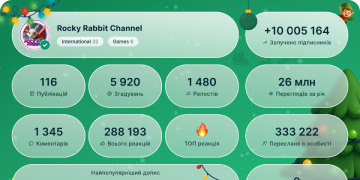
34 529
المشتركون
-1924 ساعات
-47 أيام
+6330 أيام
أرشيف المشاركات
Phrasal Verb of the Day | Vocabulary | EnglishClub
depend on (1)
If one thing depends on another, it cannot happen without the other, or it is greatly affected by the other.
➖ @EngSkills ➖
❤ 1
Word of the Day
Word of the Day: foster
This word has appeared in 1,086 articles on NYTimes.com in the past year. Can you use it in a sentence?
➖ @EngSkills ➖
❤ 1
Idiom of the Day
go for a spin (to some place)
To go for a brief, leisurely drive (to some place). Watch the video
➖ @EngSkills ➖
❤ 2
Word of the Day
wailful
Definition: (adjective) Vocally expressing grief or sorrow or resembling such expression.
Synonyms: lamenting.
Usage: The men wavered in indecision for a moment, and then with a long, wailful cry the dilapidated regiment surged forward and began its new journey.
Discuss
➖ @EngSkills ➖
❤ 2
إظهار الكل...
❤ 1
Merriam-Webster's Word of the Day
spontaneous
Merriam-Webster's Word of the Day for November 4, 2025 is:
spontaneous \spahn-TAY-nee-us\ adjective
Spontaneous describes something that is done or said in a natural and often sudden way and without a lot of thought or planning. It can describe a person who does things that have not been planned but that seem enjoyable and worth doing at a particular time.
// The kitten captured our hearts, and we made the spontaneous decision to adopt.
// He's a fun and spontaneous guy, always ready for the next big adventure.
See the entry >
Examples:
"The Harlem Renaissance was filled with poetry and song—and with performance, as enshrined in [filmmaker William] Greaves's footage which features many spontaneous, thrillingly theatrical recitations of poems by Bontemps, Hughes, Cullen, and McKay." — Richard Brody, The New Yorker, 23 Sept. 2025
Did you know?
When English philosopher Thomas Hobbes penned his 1654 treatise Of Libertie and Necessitie he included the following: "all voluntary actions … are called also spontaneous, and said to be done by a man's own accord." Hobbes was writing in English, but he knew Latin perfectly well too, including the source of spontaneous; the word comes (via Late Latin spontāneus, meaning "voluntary, unconstrained") from the Latin sponte, meaning "of one's free will, voluntarily." In modern use, the word spontaneous is frequently heard in more mundane settings, where it often describes what is done or said without a lot of thought or planning.
➖ @EngSkills ➖
❤ 2
Slang of the Day | Vocabulary | EnglishClub
ID
identification; a document that identifies someone, like a driver's licence or a passport
➖ @EngSkills ➖
❤ 1
Phrasal Verb of the Day | Vocabulary | EnglishClub
make up for
to do something to improve the situation after you've done something wrong
➖ @EngSkills ➖
❤ 4
Word of the Day
Word of the Day: protagonist
This word has appeared in 517 articles on NYTimes.com in the past year. Can you use it in a sentence?
➖ @EngSkills ➖
❤ 2
Idiom of the Day
take a seat
To be seated; to select a place to sit. (Often an invitation or request.) Watch the video
➖ @EngSkills ➖
❤ 2
Word of the Day
barrelhouse
Definition: (noun) A cheap drinking and dancing establishment.
Synonyms: honky-tonk.
Usage: After dinner, we grabbed a couple of beers at the local barrelhouse and let loose on the dance floor.
Discuss
➖ @EngSkills ➖
❤ 1
إظهار الكل...
❤ 1
Merriam-Webster's Word of the Day
fidelity
Merriam-Webster's Word of the Day for November 3, 2025 is:
fidelity \fuh-DELL-uh-tee\ noun
Fidelity is the quality or state of being faithful to a person, such as a partner or spouse, or a thing, such as one’s country. Fidelity can also refer to accuracy or exactness in details, or the degree to which an electronic device (such as a television) accurately reproduces its effect (such as sound or picture).
// After almost three decades on the job, no one can doubt their fidelity to the company.
// The movie’s director insisted on total fidelity to the book.
See the entry >
Examples:
“The origins of the role [of ring bearer] actually have their roots in ancient Egypt, where a young boy would be enlisted to carry rings to a couple as a symbol of love, fidelity, and fertility.” — Shelby Wax, Vogue, 10 July 2025
Did you know?
Fidelity came to English by way of Middle French in the 15th century, and can ultimately be traced back to the Latin adjective fidēlis, meaning “faithful, loyal, trustworthy.” While fidelity was originally exclusively about loyalty, it has for centuries also been used to refer to accuracy, as in “questions about the fidelity of the translation.” Nowadays fidelity is often used in reference to recording and broadcast devices, conveying the idea that a broadcast or recording is “faithful” to the live sound or picture that it reproduces.
➖ @EngSkills ➖
❤ 1
Slang of the Day | Vocabulary | EnglishClub
mug shot
a photograph of someone taken after their arrest
➖ @EngSkills ➖
❤ 1
Phrasal Verb of the Day | Vocabulary | EnglishClub
jump in (2)
If you jump in, you get involved in a situation as soon as you notice it.
➖ @EngSkills ➖
❤ 1
Merriam-Webster's Word of the Day
arbitrary
Merriam-Webster's Word of the Day for November 2, 2025 is:
arbitrary \AHR-buh-trair-ee\ adjective
Arbitrary describes something that is not planned or chosen for a particular reason, is not based on reason or evidence, or is done without concern for what is fair or right.
// Because the committee wasn’t transparent about the selection process, the results of the process appeared to be wholly arbitrary.
// An arbitrary number will be assigned to each participant.
See the entry >
Examples:
“The authority of the crown, contemporaries believed, was instituted by God to rule the kingdom and its people. England’s sovereign was required to be both a warrior and a judge, to protect the realm from external attack and internal anarchy. To depose the king, therefore, was to risk everything—worldly security and immortal soul—by challenging the order of God’s creation. Such devastatingly radical action could never be justified unless kingship became tyranny: rule by arbitrary will rather than law, threatening the interests of kingdom and people instead of defending them.” — Helen Castor, The Eagle and the Hart: The Tragedy of Richard II and Henry IV, 2024
Did you know?
Donning black robes and a powdered wig to learn about arbitrary might seem to be an arbitrary—that is, random or capricious—choice, but it would in fact jibe with the word’s etymology. Arbitrary comes from the Latin noun arbiter, which means “judge” and is the source of the English word arbiter, also meaning “judge.” In English, arbitrary first meant “depending upon choice or discretion” and was specifically used to indicate the sort of decision (as for punishment) left up to the expert determination of a judge rather than defined by law. Today, it can also be used for anything determined by or as if by chance or whim.
➖ @EngSkills ➖
❤ 2
Slang of the Day | Vocabulary | EnglishClub
straight
heterosexual, not gay
➖ @EngSkills ➖
❤ 1
Phrasal Verb of the Day | Vocabulary | EnglishClub
pull in
If a train, a truck or a car pulls in, it arrives somewhere.
➖ @EngSkills ➖
❤ 1
Idiom of the Day
take a fit
To become very or unreasonably angry or upset; to have an outburst of rage, frustration, or ill temper. Watch the video
➖ @EngSkills ➖
❤ 1