
Survive the Jive: All-feed
الذهاب إلى القناة على Telegram
All StJ activity updates here on the All feed. ᛝ🐗 🌐 Website: https://survivethejive.blogspot.com 👕 Merch: https://survivethejive-shop.fourthwall.com ▶️ Main YouTube: https://www.youtube.com/c/Survivethejive/ 🔗 Other links: https://linktr.ee/SurvivetheJive
إظهار المزيد2025 عام في الأرقام
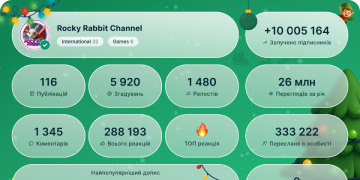
15 015
المشتركون
+324 ساعات
+267 أيام
-1030 أيام
أرشيف المشاركات
Repost from TgId: 1455051484
Anglo-Saxon metrical charms were used to magically resolve a situation or disease. These Anglo-Saxon metrical charms were originally compiled into the 10th-11th-century Lacnunga manuscript, with others being found in Bald's 10th-century Leechbook (also known as Medicinale Anglicum). Various charms in their original form include both Pagan and Christian characteristics.
Here is a collection of all Anglo-Saxon metrical charms repurposed and revised to contain only Pagan characteristics. With the following charms, some of them have been left untouched where revision was not required and so as to stay true to the original charms as much as possible.
We believe that these charms were originally developed and used in a Pagan context and later revised to fit a Christian context. With our repurposing, we have presented these charms in a way that Pagans can use today in a spiritually safe way. The revitalisation of these charms will enable modern Germanic Pagans to use them in a living tradition as it was done by our ancestors.
A special thank you to WodenWyrd (Germanic Paganism) for his equal contribution to this project with me.
Anglo-Saxon Pagan Spells
⚡ 27❤ 9👏 3🗿 1
Repost from TgId: 1847315346
Burchard of Worms’s Decretum lamented in detail a number of pagan survivals in 11th Century Hesse…
-Worshipping the sun and moon, the new moon and eclipse.
-Collecting herbs with “evil incantations”; think Nine Herbs Charm.
-Worshipping at springs, stones, trees, tombs and crossroads, “and in reverence for the place lighted a candle or torch or carried thither bread or any other offering, or eaten there, or sought any healing of body or mind.”
-Eating food offered to idols.
-Invoking “demons” to arouse tempests or change the minds of men; likely land spirits, think níðstang.
-Believing that “Diana” (Holda) leads a multitude of women in the Wild Hunt, riding on beasts in the night. Hesse was long a stronghold of the cult of Frau Holle.
-Singing and dancing at a funeral, “appearing to rejoice at a brother’s death”.
-Making wreaths for crosses at crossroads.
-Making “diabolical phylacteries” (amulets containing scrolls) of grass or amber; Bede described similar.
-Observing Thursday in honour of Jupiter (Thor).
-Guising as a stag or calf on the first of January.
-Making boy’s size shoes and leaving them in storerooms and barns so that “satyrs and goblins” (house spirits; kobold?) might bring goods.
𐃏
 5⚡ 28❤ 10🔥 1👏 1
Repost from Survive the Jive: All-feed
AMA on Friday Night!
Not done an AMA for a year so it is time! I try to do at least one AMA per year so if you miss this one you might not get a chance to ask me questions again for 12 months!
I will be streaming on YouTube (2nd channel) and on X
You can guarantee I will answer your question if you sign up as a patron HERE and send your questions in advance OR if you send in a superchat via YouTube during the stream itself.
5❤ 17🎉 3👍 2🐳 2Repost from TgId: 1515972956
-SOLIDUS-
✨Denne fantastiske guldmønt - en romersk-byzantinsk solidus - er netop dukket op af den vestjyske muld ved Lønborg! ✨
🪙Forsiden viser kejser Anastasius I (491-518 e.Kr.), portrætteret som vaskeægte krigerkejser: iført panser, med spyd over skulderen, skjold og rytter.
Inskription: D N ANASTAVS PP AVG.
🪙På bagsiden stråler sejrsgudinden Victoria. Den bevingede gudinde holder et langt kors, og bag hende ses en stjerne.
Inskription: VICTORIA AVCCC
Guldmøntens liv startede i Konstantinopel i det Østromerske rige og endte i Lønborg. Undervejs blev mønten omdannet til et smykke. En rørformet guldøsken blev påsat, så solidus'en kunne bæres som smykke/amulet. Den bevæbnede kejser vendte ud mod verden, mens sejrsgudinden vendte ind mod smykkebæreren.
Selvom mønten er tydeligt slidt, fortæller netop det sin egen historie: Den har uden tvivl været båret med stolthed gennem lang tid. Måske var mønten også slidt allerede inden den blev til smykke.
Mønten er fundet ved Lønborg - et sted, vi efterhånden kan betegne som et rigdomscenter og måske et magtcentrum i oldtiden. Gang på gang dukker de mest utrolige fund op netop her.
👏 Kæmpestort tillykke til detektorfører Viggo Kristensen med dette helt fantastiske fund! Vi kan stadig ikke få armene ned!
❤ 22🔥 5⚡ 1
FYI this ancient curse is the origin of the modern expression "Cor blimey" which is a miced oath from "(May) God blind me"
1❤ 32🤓 11👍 7👀 4🔥 3🤔 1Photo unavailableShow in Telegram
Only Five Celtic inscriptions from Roman Britain are known, one of which is on this fragment of a lead curse tablet from Bath (Aquae Sulis). The many other curse tablets found there are all in Latin but this one is Brythonic written in Latin script.
Mees (2009) reconstructs the core lines (4–6) as a Brythonic phrase equivalent to: "May the thief's eyes be twisted out (or blinded)!" (Old Brittonic: uocant-edi uer-and-ant, parsed as wo-kant-eti 'under compulsion' or 'binding' + *wer- 'over/against' + and- 'take out/extract' + -ant verbal ending, implying extraction or twisting of body parts like eyes, a common curse motif).
1⚡ 45❤ 5🤓 5🔥 4👀 1Repost from TgId: 1607679320
Where the land meets the sea and the tide eternally keeps the time, we welcomed in the harvest and the bounty of our Lady Nehalennia. Last saturday together with Traditie, the largest Flemish Heathen organization, we honoured Nehalennia, hailed her in from the shore and carried her in procession to her reconstructed temple here in Old Zeeland. It was a really great day overall, with workshops and plentiful meals as well as ritual. The guided meditation was one of the highlights for me.
I hope you all have had a rewarding harvest season, whether that be internal or external. Now as nature is slowly descending into slumber, we too turn inward and prepare for the winter to come.
Wees heel!
1👍 54🙏 13❤ 10🥰 7🔥 4⚡ 1In the 2nd and 3rd centuries AD, there were at least two or three temples for Nehalennia in Western Netherlands. This coastal region was important for the trade between the Rhine area and Britain. The North Sea was formerly called Mare Germanicum "German sea" and sometimes in the third/fourth century Mare Saxonicum "Saxon sea".
In 545 AD, Greek author Procopius wrote in ‘History of the wars’ that men living on the continental coast of the German sea, under the jurisdiction of the Franks (probably Zeeland), are tasked with ferrying the ghosts of the dead to Britain at night. When they arrived the ghosts would speak their names, disembark, and then the men could row back to the Netherlands.
It seems likely this practice was related to the cult of Nehalennia and though mostly observed by Germanic folk, may have had Celtic origins relating to the belief in an Island of the Dead in the West.
1❤ 57👍 14⚡ 3🔥 2Photo unavailableShow in Telegram
The Dutch goddess of sea trade, Nehalennia by Andrew Whyte
❤ 81👍 12🙏 4⚡ 1🔥 1
Repost from TgId: 1476678997
Nehalennia - Celtic-Germanic goddess, worshipped by travellers that crossed the North Sea from the Netherlands and/or went into the rivers networks.
❤ 67👍 13⚡ 3🗿 1
Photo unavailableShow in Telegram
An idol of the goddess of cross channel trade, Nehalennia, during a coastal blot in the Netherlands earlier this year
1❤ 78⚡ 22🔥 2🥰 2👏 1The Germanic animal style is typical of Germanic art from c. 475-1100 AD but we can see it existed in an earlier form too.
In the 3rd century, Northern Europeans, who had formerly been influenced artistically mainly by Celts, and more recently by Romans, adopted an old Scythian way of depicting stags and other quadrupeds that would become the “backward facing beast” motif which endured to the Viking age.
On the Thorsberg disc, c. 250 AD, which is mainly in a Roman style, there are also four beasts in a Scytho-Germanic style. A gold disc from Tannendorf in Lower Saxony c. 300 AD has an early backward facing beast, and other deer-like animals with S shaped bodies are seen on Nordic drinking vessels dated to the 3rd century.
1❤ 62⚡ 12🤔 3👍 2🔥 1🎄 1AMA on Friday Night!
Not done an AMA for a year so it is time! I try to do at least one AMA per year so if you miss this one you might not get a chance to ask me questions again for 12 months!
I will be streaming on YouTube (2nd channel) and on X
You can guarantee I will answer your question if you sign up as a patron HERE and send your questions in advance OR if you send in a superchat via YouTube during the stream itself.
❤ 28⚡ 8🥰 3🤔 2👍 1🤩 1
This article was intended to explain the difference between Heathenry and other Paganisms. The hyperbolic title is not my own creation. At no point do I claim Paganisms such as Heathenry will replace Christianity, I simply note that Paganisms are on the rise and Heathenry is an authentic expression of Englishness and its resurgence is a reaction against the evils of our age.
https://unherd.com/2024/04/britains-future-is-pagan/
❤ 63👍 6⚡ 4🙏 2🔥 1
Repost from Survive the Jive: All-feed
Photo unavailableShow in Telegram
Oh Indra! Borne by thy swift chariot, cut down the Mondays which the cat hates!
🗿 68🔥 14⚡ 13❤ 5🥰 3
Repost from TgId: 1835378288
Photo unavailableShow in Telegram
Ladies & Gentlemen, I am proud to present one of my biggest projects to date.
Opened back in 2014, the Newark Odinist Temple have a huge significance in the revival of England's native religion. I met the priest-in-charge, Ralph Harrison, for an in depth discussion of how the temple became a reality, how the Odinist Fellowship assist with legal matters for religious Odinists, and what the future holds for Odinism in the British Isles.
After having visited many churches, stone circles, ossuaries, standing stones and all other types of historical places over the years, for the first time, I will be stepping into an English pagan temple.
Watch here - https://youtu.be/ukwZtIYGMGU
⚡ 83👍 11❤ 9🤔 7🙏 7🔥 1
Just want to say that Ancestral Whispers is a Georgian who is committed to making all Yamnaya reconstructions have big bushy turkish eyebrows, and a huge fleshy nose with middle eastern shaped nostrils and a low nose bridge like on Caucasians and arabs etc.
The fact that people with higher yamnaya ancestry dont look like this, doesnt phase him at all
Repost from TgId: 2052986837
40:24
Video unavailableShow in Telegram
GÓÐS V JǪTNAR
Стены Асгарда
Интерпретация мифа
Строки 25–26 Vǫluspá
Отсылают к тому же мифу, который пересказывается в “Snorra Edda” В «Gylfaginning» глава 42
Речь идёт об истории о Йотунне, явившемся в облике чужеземца, который обманом заключил с Богами договор о возведении стен Асгарда в обмен на Солнце, Луну и руку Фрейи в браке.
Этот миф — один из наиболее искажённых и неверно понимаемых во всей скандинавской мифологии, и потому Том Роузелл решил объяснить данный миф как можно яснее
https://youtube.com/@survivethejive?si=BJfyfPIekPjHHzJ6
IMG_8241.MP4838.51 MB
⚡ 5