Survive the Jive: All-feed
Open in Telegram
All StJ activity updates here on the All feed. ᛝ🐗 🌐 Website: https://survivethejive.blogspot.com 👕 Merch: https://survivethejive-shop.fourthwall.com ▶️ Main YouTube: https://www.youtube.com/c/Survivethejive/ 🔗 Other links: https://linktr.ee/SurvivetheJive
Show more2025 year in numbers
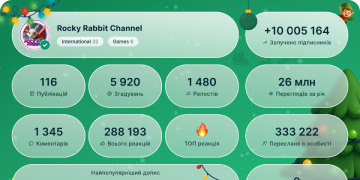
15 017
Subscribers
+324 hours
+267 days
-1030 days
Posts Archive
Repost from Survive the Jive: All-feed
My article for WhyNow explains the potential pagan influences on the 5th November UK Bonfire night
https://whynow.co.uk/read/bonfire-night-is-an-orgy-of-religious-hatred-older-than-we-think
❤ 30🔥 10
Repost from Survive the Jive: All-feed
Some people WRONGLY dismiss Halloween as a commercial American custom. Others think the origin of pumpkin jack-o'-lanterns is exclusively Irish or at least “Celtic”. In reality these lanterns are as much British as Irish, and the tradition is found in other Germanic nations such as Germany and Sweden too.
Prior to the American pumpkin tradition, people in Ireland, Scotland and England used turnips, swedes and mangelwurzels. The lanterns were associated with the Catholic holiday of All Hallow’s Eve in Ireland, but protestants in Britain sometimes moved the festival, such as in Somerset where it was held on the last Thursday of October and was called “punkie night”. Punkie means ‘jack-o-lantern’ in West Country dialect and these were carried about in a tradition much like trick or treating in America. They didn’t always have faces carved on them, but they were always intended to scare away evil.
The word punkie probably comes from Old English Pūcan or pūclas which were evil spirits in Anglo-Saxon folklore, cognate to Swedish and Norwegian puke “evil spirit”. The Irish word púca”spirit” is probably a loan from Old English as the p sound didn’t exist in primitive Gaelic.
The earliest attestations of carving such lanterns are from Worcestershire in England in 1840, Hampshire, England in 1838, and Scotland in 1808. So there is no reason to think it originated in Ireland. Various traditions of bonfires and carrying root lanterns or blazing fagots while going door to door for food existed across the British isles but the switch to pumpkins instead of turnips occurred in the USA.
The tradition of using turnip lanterns was still extant as far East as Sussex in 1973 when it was recorded among children there by Jacqueline Simpson in the Folklore of Sussex. Therefore, the introduction of the American pumpkin jack-o-lantern in Britain occurred while the native turnip tradition still existed, so there has never been a time when British people DIDNT make jack-o-lanterns for this season.
The same kind of tradition is attested in the 19th century among Germanic people on the continent who made vegetable lanterns between late October and early November. This tradition still survives in places and the lanterns are sometimes mounted on poles as they are carried about. Their names include:
German: Rübengeister ('turnip spirits')
German (Swabia): Schreckgesichter ('horror faces')
Swiss: Bochseltieren ('rumble animals')
South Germany and Lorraine, France: Rummelbooze ('turnip disguise')
German (Hesse): Gliihnische Deijwel ('glowing devil')
Swedish: rovgubbe ('turnip man')
As in the British Isles, the lanterns are often said to represent spirits and the children who carry them receive treats. Other times they are placed outside the house to protect the home from evil.
In my own video essay on the pagan origins of Halloween, I demonstrate that just as Halloween has a pagan precedent of Samhain in Ireland, it has other pagan precedents across Europe including Slavic Dziady, Baltic Mārtiņi or Mārtiņdiena, and the Germanic pagan festival which marked the start of Winter and was known in Old English as Winterfylleth, in Old Norse as Vetrnætr, and included a sacrifice made to elves (ancestral spirits) known as Álfablót.
Therefore this season has always been associated with spirits of the dead in many European cultures and Halloween is highly traditional and far from a merely commercial American innovation.
❤ 44👻 7🔥 1🤔 1
Repost from TgId: 1455051484
The Uppåkra complex in southern Sweden is one of the largest sites of cult activity dedicated to Wōden/Óðinn from the Iron Age. It is believed to have been the former site of a chieftain that was both a marketplace and a place of worship as evidence of other structures surrounding the temple were found.
Close to the buildings were deposits of spears and shields, and a right-side ocular and eyebrow from a helmet, similar to the types found at Sutton Hoo, Valsgärde and Vendel. A bronze horned figure was also discovered with the right eye on his face purposely struck out.
⚡ 43🙏 3🏆 3❤ 2👍 1
Repost from TgId: 1847315346
The reconstructed replica of the Uppåkra temple, with a statue of Odin based on the Odin figure found at the site of the original temple. ᚬ
⚡ 46❤ 4🙏 3🗿 2
Repost from N/a
01:00
Video unavailableShow in Telegram
The Autumn Equinox is the turning point in the year when daylight and darkness become even once again, tipping the scales towards the darkest period of the year when the nights grow longer than the days and the weather gets colder. Traditionally, harvests would be reaped during this time and various rituals were conducted for the gods and spirits residing over abundance. Attention was given to the spirits and ancestors as it was believed that this time was liminal and other realms were accessible. At the cusp of the Equinox, the dark half of the year begins to slowly gain dominance once again.
- The Celto-Germanic Wheel of the Year
Full article on our website at ansuzsociety.com
IMG_2638.MOV11.88 MB
⚡ 56🔥 10❤ 5🥰 5🙏 2
I like the altar the Ansuz society have made, althought Celts and Germanics did not actually observe the start of Winter at teh equinox, rather at the full moon which is next week. We call this Winterfylleth in English paganism.
👍 35🤓 2⚡ 1❤ 1
The idea that Vanir represent pre-Corded Ware agricultural gods is doing the rounds again.
Alvi makes nice videos but this old theory really doesn’t hold up. Vanir do not come from a pre IE religion:
-Thor and Odin were prayed to for good harvests
-Thor’s mother is literally Mother Earth
-Freyja is not a harvest goddess
-Frey is the god of the barrow which is the most Indo-European thing in existence
-All the Vanir names have IE etymological roots
-Other IE religions such as Indo-Iranic also have two tribes of gods (asuras and devas) - evidently a feature of PIE religion
-The last merging of peoples in Scandinavia was not the IE battle axe with the EEF TBK, rather it was merging of different IE groups
Also this isn’t how religions really work. When a people is defeated and replaced, their gods don’t usually get incorporated into the religion of the invaders.
Much is made of Frey being described with a boner by Adam of Bremen. The logic is dick=sex, sex=fertility, fertility=crops. But erect dicks in many cultures have completely different symbolic meanings eg. Romans used them as charms against evil. We know that erections were associated with virile masculinity and war in the context of Nordic Bronze Age petroglyphs so we could just as easily argue Frey is a war god as a fertility god based on his boner alone.
It just isn’t a good theory.
⚡ 66👍 15❤ 10💯 7🤔 3🤓 2🗿 2🔥 1
Photo unavailableShow in Telegram
Basic model of a typical English person with a 4 way breakdown:
1. Anglo-Saxon
2. Briton
3. Medieval French
4. Viking
❤ 58⚡ 22🤷♂ 3👏 2👻 1
Repost from Survive the Jive: All-feed
01:26
Video unavailableShow in Telegram
Robin Redbreast (1970) is a real folk horror classic. Anglo-Saxon paganism persists among a rural community in Worcestershire, and a middle class urbanite woman is entangled in a secret rite. These are my favourite clips
robin redbreast clips.mp480.77 MB
👍 56❤ 11⚡ 3🔥 3🥰 1
Repost from Survive the Jive: All-feed
The Wild Hunt of Woden in Dartmoor
https://youtu.be/luyXW_kXlGs
⚡ 35👻 4👍 1
Repost from Survive the Jive: All-feed
This new artwork of a draugr by Joan Oliveras shows him wearing the helmet from grave 14 at Vendel. You can see a reconstruction in this video.
Listen to Dave Martel the Bog Lord go off about the undead in this stream
🔥 31👻 10👍 1
Repost from Survive the Jive: All-feed
HALLOWEEN 🎃 SPECIAL 👻 in which Dave Martel and I discuss the history of horror and our favourite Halloween films 🍿
https://youtu.be/WjMkr9Ra8OI?feature=shared
❤ 24👍 8👻 8
Notice concerning delayed Shirt shipments with Spring.
A year ago I started to shift my shirts to a new shop on Fourthwall but I continued to leave the previous shop open on Spring, formerly Teespring.
I have not received any payments from Spring since January 2025, and when I inquired as to why this was, they have informed me it is because orders as far back as January are waiting to be completed and have not been shipped. This means some of you may have been waiting for over 8 months for the products to come!
I am assured that they will eventually be shipped, and then I will finally be paid for them. I apologise to my customers who have been waiting for delayed orders for so long. I encourage other customers to make use of my other store on Fourthwall if you wish to purchase products and those who have used Spring to just hold on a bit longer.
❤ 24
A walk through an Australian rainforest in which I found some gold! https://www.tiktok.com/@survivethejive/video/7566667090640342294
❤ 27🎉 5🔥 1
Repost from TgId: 1847315346
Photo unavailableShow in Telegram
This bear’s tooth amulet from the Orkneys bears an inscription reading only “fuþork”. The mere mention of the sacred runes seem to have been enough to imbue it with apotropaic properties.
ᚠᚢᚦᚬᚱᚴ
⚡ 54❤ 9🔥 4🥰 2
Repost from TgId: 1406913493
00:45
Video unavailableShow in Telegram
Ulfheðnar
4.21 MB
⚡ 77❤ 15🔥 1
Jonathan Bowden always wore a wooden pendant with an ethel rune carved on it when speaking. In an interview on 21st November 2009, he revealed that he didn't really understand it's true meaning: "homeland/ property" and he wasn't a pagan in the true sense. He was a Heathen moralist like Nietzsche, but as far as I know, he never participated in blot (which Nietzsche actually did at least once, as a child).
JB: Well, I never really converted to paganism. I mean, there are some orthodox pagans, if you can have such a thing, who probably think I am not one. But I’m a Nietzschean and that’s a different system. Somebody made this for me. [Points to ethel rune pendant.] And I like Odinic paganism sort of as an objectification of my sort of sensibility. Does one believe the gods objectively exist in another realm? Well, you see, religion is a philosophy about life which is sacristic and has rituals in which you partly act out, therefore it’s more important because it’s made slightly more concrete than ideas or it’s really just based upon ideas. There are relatively simple but powerful ideas at the crux of all the big religious systems. Most people are born in a system and just accept that and go along with it as long as it’s not too onerous or they feel like they live their life through it properly.
I just agree with the ethics of that type of Nordic paganism, which is really how the Vikings lived and how they behaved. I’m less concerned with small groups, which I respect. I like the Odinic Rite, but I personally believe that those sorts of things will only ever activate post-modern minorities and very small ones at that.
I think people should identify with what they think they are and the values that they hold. This symbol really means strength or courage or masculinity or the first man or the first principle of war or the metaphysics of conflict. So, I just think it’s a positive system of value.
I never really was a Christian. Culturally, I have great admiration for elements of Christian art. More so than most people who are pagan who have violently reacted against it. I don’t really share that emotionalism. But I don’t agree with Christian ethics. Deep down, they’ve ruined the West, and we’re in the state that we are because of them.
👍 57⚡ 24❤ 17🤔 4
This article provides scientific sources on the origins of the English ethnic group. Use it when arguing with Anglophobic leftoids
https://survivethejive.blogspot.com/2025/10/what-is-englishman.html
⚡ 51👏 11❤ 6🫡 3
Photo unavailableShow in Telegram
Viking SAGA film broadcast at FAB! archaeological film festival in Italy.
🇮🇸🐦⬛️⚔️
'Sagas of the Raven Land' is a history documentary in which historian Tom Rowsell journeys to Iceland, immersing himself in the landscapes that inspired the Icelandic sagas of the Viking Age. He rides native horses across the fells, bathes in hot springs, and traces the footsteps of legendary saga heroes like Eirik the Red and Egill Skallagrimsson.
CLICK HERE TO WATCH IT NOW
⚡ 68❤ 8🔥 8👍 4🏆 2🤷♂ 1🤔 1👻 1
Photo unavailableShow in Telegram
I know that I hanged for nights full 9
🤯 62⚡ 32😎 13❤ 11🗿 6🥰 5🙏 2🎄 1