
Curiosity Tea ☕️
رفتن به کانال در Telegram
Take a Sip of Knowledge with @Curiosity_Tea of Interesting Question & Answers regularly. For Paid Promotion: @IronFist04 Our Channels @CuriosityTea_Official For Info/Report/Feedback: @IronFist04 @LEOnlk1999 @sgrmshrsm7
نمایش بیشترسنغافورة19دسته بندی مشخص نشده است
2025 سال در اعداد
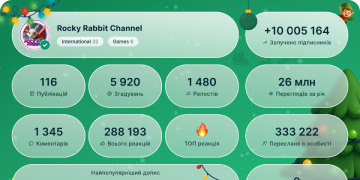
83 836
مشترکین
-1724 ساعت
-1537 روز
-72230 روز
آرشیو پست ها
Why do Pilots wear headphones?
Aviation headsets fall into two broad categories: passive noise reduction and active noise reduction (ANR). The passive noise reduction headsets rely on a good seal around the ear and a strong clamping force.
ANR headsets must be powered to work properly but all ANR headsets still function without power as passive noise reducing headsets. Power for an ANR headset can come from a battery box or from aircraft power but not interchangeably. Aircraft power requires panel installation of a plug specific to the headset brand (a single connector provides power, headphone and microphone connections). The cable from the headset has 2 plugs (for airplanes) or one plug (for helicopters). These two plug styles are equivalent electronically, with the helicopter cable having an extra conductor in order to include the microphone and headphones in the same plug. The two-plug variant has one plug for the headphones and one of the microphone. These differ from gaming headsets in that the headphone plug is 0.25" (the kind a nice stereo receiver uses) and the microphone plug is 0.206". This difference in sizes is to avoid mixing up which plug goes in which jack.
The headset is connected to the airplanes audio panel. Audio panels vary in complexity but their basic job is to provide an intercom for communication between occupants of the airplane and access to the com radio for communication with ATC. The audio panel is also able to monitor (listen) the navigation radios certain types of beacons. In transport aircraft the audio panel is also tied into the passenger address system and the flight attendant's phones in the cabin.
The headsets can be operated in a hot mic setup or the mic can be explicitly turned on and off. The hot mic is the usual method and the audio panel provides a squelch control so you aren't broadcasting the cockpit noise when not talking. The ATC transmissions are via a push-to-talk (PTT) switch.
How exactly does the Sun provide us with Vitamin D?
It is a myth that sunlight provides us vitamin D or vitamin D is present in sunlight.
The fact is vitamin D is synthesized in plants, animals and humans in presence of sunlight.
There are two types of vitamin D - vitamin D2 (Ergocalciferol) present in plants including ergot and mushrooms and vitamin D3 (Cholecalciferol) in animals.
Vitamin D2 (Ergocalciferol) and vitamin D3 (Cholecalciferol) are synthesised in presence of ultraviolet light (UV) of sunlight as given below.
In plants, the ergo-calciferol (vitamin D2) is derived from UV irradiation of ergosterol (a kind of sterol present in plants).
In animals and humans, when skin is exposed to sunlight, chole-calciferol (vitamin D3) is produced in skin by UV irradiation of 7-dehydro-cholesterol (a kind of cholesterol present in animals and humans).
Sunlight triggers the first of three chemical reactions that converts an inactive compound in the skin into active vitamin D. Ultraviolet B rays from the sun convert a natural vitamin D precursor present in your skin, 7-dehydrocholesterol, into vitamin D3. This travels to the liver where the addition of oxygen and hydrogen to vitamin D3 changes it into 25-hydroxyvitamin D. Doctors test for this intermediate and still inactive form of vitamin D in blood to determine your vitamin D status. Final activation of 25-hydroxyvitamin D takes place in the kidneys, where more oxygen and hydrogen molecules attach to 25-hydroxyvitamin D and convert it into its active form known as 1,25 dihydroxyvitamin D, or calcitriol.
What is Tempered Glass?
Tempered glass is not harder or softer, easier to scratch, break, or more porous than annealed, but it is tougher. Tempered glass is designed to use in areas where there is a high risk of contact, temperature changes, high temperatures, and breakage.You will often find tempered glass in architectural situations like windows, glass railing, wall cladding, shelving, doors, and showers.
Unlike annealed glass or what we know as “ordinary” glass, tempered glass does not break into large jagged shards that can cause serious injuries. Instead, it breaks into smaller granular pieces that are less likely to cause harm. This is why tempered glass is used in passenger vehicle windows, refrigerator trays, shower enclosures, microwave ovens, and other things we use on a regular basis.Tempered glass is also much stronger than annealed glass. It undergoes a complex manufacturing process that toughens it both physically and thermally.
To prepare glass for the tempering process, it must first be cut to the desired size. The glass is then examined for imperfections that could cause breakage at any step during tempering. An abrasive such as sand paper takes sharp edges off the glass, which is subsequently washed. Next, the glass begins a heat treatment process in which it travels through a tempering oven, either in a batch or continuous feed. The oven heats the glass to a temperature of more than 600 degrees Celsius. (The industry standard is 620 degrees Celsius.) The glass then undergoes a high-pressure cooling procedure called "quenching." During this process, which lasts just seconds, high-pressure air blasts the surface of the glass from an array of nozzles in varying positions. Quenching cools the outer surfaces of the glass much more quickly than the center. As the center of the glass cools, it tries to pull back from the outer surfaces. As a result, the center remains in tension, and the outer surfaces go into compression, which gives tempered glass its strength.
Another approach to making tempered glass is chemical tempering, in which various chemicals exchange ions on the surface of the glass in order to create compression. Glass in tension breaks about five times more easily than it does in compression. Annealed glass will break at 6,000 pounds per square inch (psi). Tempered glass, according to federal specifications, must have a surface compression of 10,000 psi or more; it generally breaks at approximately 24,000 psi.
Why is the Medical symbol a snake on a stick?
The snake and staff are known as the "Rod of Asclepius". Asclepius is the Greek god of Medicine and Healing, hence the symbolism. Snakes then symbolized rejuvenation. Many mistakenly think that the Caduceus (a short staff with two snakes and a winged top) is the symbol of medicine, or call the Asclepius staff a caduceus. The Caduceus is the symbol or Hermes (Roman = Mercury) the messenger and symbolizes travel, commerce, etc. While this may not be all of it, some of the confusion traces back to around 1920 when the US Army mistakenly used the Caduceus for their medical personnel.
What causes Red Eyes in Photos?
The Red-eye effect in photography is the common appearance of red pupils in color photographs of eyes. It occurs when using a photographic flash very close to the camera lens (as with most compact cameras), in ambient low light. The effect appears in the eyes of humans, and of animals that have tapetum lucidum.
The tapetum lucidum is a biologic reflector system that is a common feature in the eyes of vertebrates. It normally functions to provide the light-sensitive retinal cells with a second opportunity for photon-photoreceptor stimulation, thereby enhancing visual sensitivity at low light levels.
How does Airbag work in automobiles?
When a car hits something, it starts to decelerate (lose speed) very rapidly.
An accelerometer (electronic chip that measures acceleration or force) detects the change of speed.
If the deceleration is great enough, the accelerometer triggers the airbag circuit. Normal braking doesn't generate enough force to do this.
The airbag circuit passes an electric current through a heating element (a bit like one of the wires in a toaster).
The heating element ignites a chemical explosive. Older airbags used sodium azide as their explosive; newer ones use different chemicals.
As the explosive burns, it generates a massive amount of harmless gas (typically either nitrogen or argon) that floods into a nylon bag packed behind the steering wheel.
As the bag expands, it blows the plastic cover off the steering wheel and inflates in front of the driver. The bag is coated with a chalky substance such as talcum powder to help it unwrap smoothly.
The driver (moving forward because of the impact) pushes against the bag. This makes the bag deflate as the gas it contains escapes through small holes around its edges. By the time the car stops, the bag should have completely deflated.
Why does banging your Elbow give you an Electric Shock?
The spot where it occurs is called the funny bone. The funny “bone” is actually a long vine of a nerve called the Ulnar Nerve.
Between the humerus and the forearm there exists a void, what is called the cubital tunnel, where the nerve is the most vulnerable as at the elbow the nerve is less protected by muscle,fat and skin and can be easily bumped.
When you hit your funny bone against something, the unprotected nerve is pressed against the bone. It is the squeezed or irritated ulnar nerve that spouts the waves of pain, emitting the “electric shock”. The waves terrorize the regions innervated by the nerve: the forearm, the pinkie and half of the ring finger.
A pinched nerve can start in several places throughout your body, but usually in the joints. When a pinched nerve is in your elbow, it can leave your arm and hand feeling sore, numb, or weak.
Pain and tingling sensations to shoot down your forearm. People often describe this sensation as an electric shock like pain typical of an irritated nerve. Usually, it quickly resolves, but it can also cause more persistent symptoms in some people.
What is a Constellation?
A constellation is a group of stars that make an imaginary shape in the night sky. They are usually named after mythological characters, people, animals and objects. In different parts of the world, people have made up different shapes out of the same groups of bright stars. It is like a game of connecting the dots. In the past creating imaginary images out of stars became useful for navigating at night and for keeping track of the seasons. Because all the stars are at different distances, the constellations would look totally different to inhabitants of another planet orbiting another star.
The International Astronomical Union, in 1922, decided it was important to standardize and ratify the modern constellations to facilitate new cataloging and end centuries of confusion and controversy. They established official boundaries for each constellation, carving up the sky into sections. There is no part of the Earth's sky which does not belong to a constellation.
There are officially 88 constellations, 48 of which are ancient Greek in origin, the majority of those comprised largely of rehashed ancient Babylonian, Egyptian, and Assyrian stories. The writings of Ptolemy usually provided the official record of these shapes and tales, along with names for the brightest stars, almost all of which are Arabic.
The remaining constellations are “modern,” having been written down between the 16th and 18th centuries by various astronomers, especially those exploring the skies of the Southern hemisphere for the first time. Having been recorded during an age of scientific revolution, these new constellations include a great many research instruments: Microscopium, Telescopium, Antlia the air-pump, Fornax the chemical furnace, Pixis the compass, Horologium the clock, etc.
The northern skies are more “dense” in stories, with roughly 55 of the 88 constellations visible without moving south of the equator.
How are Pearls formed?
Natural pearls are made in oyster shells. The oyster sits on the bottom of the sea and keeps its shell shut, but occasionally a grain or two of sand sifts in. When that happens the oyster finds it irritating. It squirts out some stuff (like the stuff that makes its shell) to surround the sand and make it less irritating. The tiny grain of sand gets bigger and bigger in size as the stuff surrounds it and hardens. Eventually it gets to be quite a good sized “thing”. That “thing” is a pearl. The pearl can be pulled out of the shell and drilled.
In cultured pearls, people help the process along. They actually inject the sand into the oysters in pearl farms, and check to be sure the pearl is growing. When it is the appropriate size it is harvested and drilled.
Freshwater pearls are shaped liked grains of sand, but salt water pearls and cultured pearls are round.
What is the concept behind Leap Year?
The solar year is not exactly 365 days. It is 365.24219 days. That means it is almost a quarter of a day longer than our standard 365 day calendar. Over time, that adds up. After four years, the calendar would be off by almost a full day. After 120 years, the calendar would be off by a month. Since one of the primary uses of a calendar is to help people know when to plant their crops, that ever increasing error is problematic. That’s why we have leap years - to correct for that error.
Julius Caesar, in 45 B.C., implemented the practice of adding a leap day to the calendar every four years. In the short term, this addressed the problem, but our story doesn’t end here.
The solar year is 365.24219 days long, not the 365.25 days that the leap year concept was built to address. The difference between those two numbers equates to about eleven minutes per year or a full day every 128 years. By the time of Pope Gregory in 1582, this error had built up considerably. Gregory reformatted the calendar, removing ten days from one year to get back in sync and then redefining the use of leap years to add the following rule: centennial years (e.g. 1800, 1900, 2000) are not to be leap years unless they are evenly divisible by 400.
That correction is based upon a solar year length of 365.2425 days. That’s much better, but still slightly different than 365.24219 and that difference of 0.00031 days means that after about three thousand years, the Gregorian calendar will be off by a day.
How does a Defibrillator work?
As the name suggests, the defibrillator is a device that stops fibrillation – the condition where the heart starts to beat erratically, usually during cardiac arrest.
There are several types of defibrillators, biphasic, monophasic and automated external defibrillators (AEDs). They can also be automatic internal defibrillators, with or without a pacemaker (AICD).
Cardiac arrest occurs when the electrical rhythm in a person’s heart causes it to stop beating at a normal rhythm. This results in an irregular beat called arrhythmia which prevents the heart from moving oxygenated blood around the body properly.
When blood flow to the brain and other vital organs are stopped the person will suddenly collapse and become unresponsive. You won’t be able to feel their pulse or detect breathing. A person in cardiac arrest will have minutes to survive and using a defibrillator is the only way to help them recover and get their heart beating at a normal rhythm (sinus rhythm) again.
A defibrillator works by de-polarising the cardiac muscle with a short electrical shock. This allows the cells in the heart to recharge at the same time, reestablishing the sinus rhythm in the process.
How did Marathons originate?
The modern marathon has it’s origin story in ancient Greece. A messenger named Philippides was tasked with bringing news of the Battle of Marathon to Athens, approximately 25 miles away. Once he reached the Acropolis and gave them the news that the Greeks had won, he died.
Fast forward to the 1896 Olympic games in Athens, and they decided to have a race retracing Philippides steps. So they organized a 25 mile race from Marathon to Athens and called it the “Marathon”
From there the distance fluctuated a bit between 24.85 miles and 26.56 miles as it was determined by the course set out by the organizers. But in 1908 during the London Olympics, they were going to have a 25 mile race, but the organizers decided to change the route to run past the Royal Box so they ended up with 26.2. After that there was still some fluctuation, until 1921 when the standard was set based upon the 1908 Olympic marathon distance.
Why does the Nose of some people start bleeding at Higher altitude?
There is a counter-pressure (equal and opposite) in our body with respect to atmospheric pressure at normal altitudes. Atmospheric Pressure decreases with increasing altitude. Hence, as we move to higher altitudes, the atmospheric pressure is less compared to the blood pressure as human body takes some time to adjust to the changes in atmosphere pressure.
As you climb higher, the amount of oxygen in the air decreases. This makes the air thinner and dryer,
which can in turn cause the inside of your nose to crack and bleed.
Another reason why mostly the nose is affected is that, humidity also takes a dip at higher altitudes. As the nose is the region where there is continuous inflow and no outflow of air, the soft inner skin(mucosa) loses its moisture rapidly and develops micro cracks.
First Aid:
Sit upright and tilt your head slightly forward. Pinch the soft part of your nose by applying pressure using thumb and a finger. Pinching sends pressure to the bleeding point on the nasal septum and often stops the flow of blood.
Breathe through your mouth while the nostrils are pinched.
After 10 minutes, check if the bleeding has stopped by releasing the pressure. If the bleeding hasn't stopped, reapply the pressure for another 10 minutes.
Apply an ice pack to your nose and cheeks. Cold will constrict the blood vessels and help stop the bleeding.
How do Fireworks get their colours?
Fireworks have an outside shell that’s called a mortar. It can be made of many things including cardboard, papier-mache or plastic.
Inside the mortar are compartments. The bottom compartment is filled with black powder (potassium nitrate, charcoal and sulfur) that will be the fuel for the firework.
The top compartment contains the pyrotechnic stars that make the colors and shapes we love to see. The stars are made of a fuel that burns and minerals and metals pressed together provide the color. The way the stars are arranged in the mortar provides the shape of the firework, like ovals, stars or rectangles.
Stars contain five basic types of ingredients.
• A fuel which allows the star to burn
• An oxidizer—a compound which produces (usually) oxygen to support the combustion of the fuel
• Color-producing chemicals
• A binder which holds the pellet together.
• A chlorine donor which provides chlorine to strengthen the color of the flame. Sometimes the oxidizer can serve this purpose.
Some of the more common color-producing compounds are Barium which produces bright greens; strontium yields deep reds; copper produces blues; and sodium yields yellow. Other colors can be made by mixing elements: strontium and sodium produce brilliant orange; titanium, zirconium, and magnesium alloys make silvery white; copper and strontium make lavender. Gold sparks are produced by iron filings and small pieces of charcoal. Bright flashes and loud bangs come from aluminum powder.
What causes Bones to make popping sounds?
To understand what happens when we 'crack' our knuckles, or any other joint, first we need a little background about the nature of the joints of the body. The type of joints that we can most easily 'pop' or 'crack' are the diarthrodial joints. These are our most typical joints. They consist of two bones that contact each other at their cartilage surfaces; the cartilage surfaces are surrounded by a joint capsule. Inside the joint capsule is a lubricant, known as synovial fluid, which also serves as a source of nutrients for the cells that maintain the joint cartilage. In addition, the synovial fluid contains dissolved gases, including oxygen, nitrogen and carbon dioxide.
The easiest joints to pop are the ones in our fingers (the interphalangeal and the metacarpophalangeal joints). As the joint capsule stretches, its expansion is limited by a number of factors. When small forces are applied to the joint, one factor that limits the motion is the volume of the joint. That volume is set by the amount of synovial fluid contained in the joint. The synovial fluid cannot expand unless the pressure inside the capsule drops to a point at which the dissolved gases can escape the solution; when the gases come out of solution, they increase the volume and hence the mobility of the joint.
The cracking or popping sound is thought to be caused by the gases rapidly coming out of solution, allowing the capsule to stretch a little further. The stretching of the joint is soon thereafter limited by the length of the capsule. If we take an x-ray of the joint after cracking, we can see a gas bubble inside the joint. This gas increases the joint volume by 15 to 20 percent; it consists mostly (about 80 percent) of carbon dioxide. The joint cannot be cracked again until the gases have dissolved back into the synovial fluid, which explains why we cannot crack the same knuckle repeatedly.
How does a Parabolic Antenna work?
An antenna has an active element that picks up or sends out radio waves. This active element is the one connected to the electronic circuitry. An antenna is essentially a transducer. It converts electrical energy into electromagnetic energy as as way of coupling the electronic circuit to the medium of communication called free space.
Dish antenna is curved so that all the radiation that strikes it is reflected to converge at one single point - its focus - where the amplifier or the receiver is placed. It is a parabolic reflector - a curved surface with the cross-sectional shape of a pararabola that directs the incoming waves to the focal point. This enables the maximum signal strength.
The same reason why a concave mirror is used in a reflecting telescope; it gathers all the photons and focusses it to one single point.
The satellite is situated in an orbit about 22,000 miles, or 36,000 km for those who like to count in tens, up. At this point the orbit of the satellite matches that of the Earth, and so for all practical intents and purposes it occupies the same place in the sky constantly when viewed from the ground.
It sends out radio waves. Typically satellites will operate either in the C band (3.7 to 4.2 GHz) or the Ku band (12 to 18 GHz).
The reason we have two is because of the characteristics of each. The C band is highly susceptible to ground fade but not rain. The Ku band is highly susceptible to rain fade but not ground. Consequently where there are densely populated areas where it doesn’t rain much, Ku is better. In remoter areas where you may get a monsoon, C band is a better choice.
What is the mystery behind Blue Volcano?
The active Kawah Ijen Volcano is part of a complex of volcanoes in Banywang Regency, Java. This popular complex is situated within Ijen crater with stratovolcano Gunung Merapi as the highest point. It is one of the world's most unusual volcanoes because instead of producing the usual red lava and black smoke, its underground activities result in bright blue flames rising into the air. Some people even call it electric blue fire.
The phenomenon is caused when the volcano's sulfuric gases come into contact with air temperature above 360°C.
The Ijen volcano complex has some of the highest levels of sulfur in the world. This dense collection of the gas, when exposed to oxygen and lit by the molten hot lava burns blue. Unlike regular volcanoes whose bright red lava is visible in the day, Kawah Ijen’s blue burning flames can only be seen at night.
What is Situs Inversus?
Situs inversus is a condition in which the organs of the chest and abdomen are arranged in a perfect mirror image reversal of the normal positioning.
Normal human development results in an asymmetrical arrangement of the organs within the chest and abdomen. Typically, the heart and spleen lies on the left side of the body (levocardia), the liver is located on the right, and the lung on the left has two lobes while the lung on the right has three lobes. This normal arrangement is known as situs solitus.
However, in about 1 in 8,500 people, the organs of the chest and abdomen are arranged in the exact opposite position: the heart is on the right (dextrocardia), as is the two-lobed lung, and the liver, spleen, and three-lobed lung are on the left. Yet because this arrangement, called situs inversus, is a perfect mirror image, the relationship between the organs is not changed, so functional problems rarely occur.
What are the small red lights around the CCTV cameras?
Those small red lights around the CCTV cameras are called IR LED or simply infrared LED. They're used to supply lighting for security cameras to see in dark and low light conditions which are turned off at day time. Through those small red lights, cameras can be able to capture images at dark by means of infrared.
Infrared light is part of the spectrum of light that is invisible to the naked human eye. It is, however, visible to security cameras. Those LED emitters are actually outputting infrared light. This means that at night, even when you can’t see anything, and it’s completely dark, your security camera can see what’s going on. You might have seen this when your security camera switches from day to night vision; you can see the infrared illuminator come on, perhaps with a little clicking sound.