
Survive the Jive: All-feed
Открыть в Telegram
All StJ activity updates here on the All feed. ᛝ🐗 🌐 Website: https://survivethejive.blogspot.com 👕 Merch: https://survivethejive-shop.fourthwall.com ▶️ Main YouTube: https://www.youtube.com/c/Survivethejive/ 🔗 Other links: https://linktr.ee/SurvivetheJive
Больше2025 год в цифрах
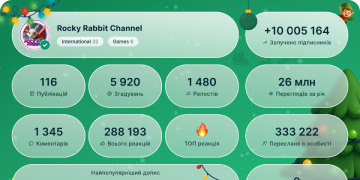
15 017
Подписчики
+524 часа
+167 дней
-2030 день
Архив постов
Фото недоступноПоказать в Telegram
this is a radial headed Lombardic brooch from Tuscany c 600 AD. Note the ravens flanking either side, probably wild boars on top
❤ 50⚡ 10🏆 2
Фото недоступноПоказать в Telegram
And this square headed double raven brooch: 600s-early 700s AD, is from Troms, Norway
⚡ 51🥰 6❤ 5🤩 3🎉 2👏 1
Just got back from the British museum and took some photos of some more such Wodenic artefacts worth considering
These three brooches with Woden’s ravens all come from Gotland, Sweden, 500-700 AD
⚡ 58🔥 9❤ 8👍 5🏆 1
Repost from Survive the Jive: All-feed
Early access for patrons to ROOTS OF THE SAXONS. My new film shot in Germany 🇩🇪
https://www.patreon.com/posts/145467000?utm_campaign=postshare_creator
🏆 31⚡ 12🤷♂ 4👏 1🤔 1
Фото недоступноПоказать в Telegram
Archaeologists have found evidence that Prometheus who gave mankind fire 400,000 years ago was a British Neanderthal named Barry
🫡 115👍 18🔥 18🗿 15💯 6🤓 5❤ 4🤷♂ 2🤩 2😍 2🐳 2
Фото недоступноПоказать в Telegram
Various Viking age Mjolnir pendants found at the port of Hedeby, North Germany. The amber one is especially remarkable.
⚡ 114❤ 37👍 3
Фото недоступноПоказать в Telegram
The film also explains in detail how the Romans transformed the culture of the Saxons.
Sign up as a patron to see it now
Subscribestar
⚡ 58🤔 7❤ 6👏 2🏆 1
Фото недоступноПоказать в Telegram
I received this early Yule gift from the great smith Neil Burridge
- it depicts the same design as seen on the Saxon bracteate shown in my new film "Roots of the Saxons". A man is dancing with snakes which have the heads of ravens. Likely represents a ritual activity pertaining to the god Woden!
⚡ 66❤ 24👍 4
Early access for patrons to ROOTS OF THE SAXONS. My new film shot in Germany 🇩🇪
https://www.patreon.com/posts/145467000?utm_campaign=postshare_creator
 11❤ 52⚡ 24🤔 1
Repost from TgId: 1916813404
Фото недоступноПоказать в Telegram
NEW EPISODE — Radio North Sea International — RNSI Yule Special
https://hearthfireradio.com/watch?v=dbyvodsq
The two months of Yule are soon to commence, and so in this epsiode Tom considers the true Heathen meaning of Yule. Following the earliest medieval sources through to the later Xmas folk customs and Wild Hunt folklore, he emphasises the fact that Yule is a ritual for the fertility of the land which calls upon Odin, Frey, Njord, the king and the dead - all of whom must be placated with special offerings.
6🔥 48🐳 7❤ 4🤔 4🤷♂ 2👻 1What is the actual reason for pagans to celebrate Yule? How is it celebrated and for whom? Most people who think they know, don’t, so in this podcast I explain all
🤔 19👀 7❤ 2
Фото недоступноПоказать в Telegram
We shall soon have a clearer picture of the reconstructed Proto-Celtic language, thanks to researchers at Aberystwyth University who are compiling a dictionary of ancient Celtic words.
They will rely on Proto-Goidelic Ogham inscriptions from the 2nd-6th century AD in Ireland (as well as some Ogham in Britain), Roman era Brythonic inscriptions in Latin script, as well as Roman sources.
Dr Simon Rodway, a senior lecturer in the department of Welsh and Celtic studies at Aberystwyth told the Guardian, “With the exception of a very small number of inscriptions from Roman Britain in Celtic languages, we’re dependent on documents that are written either in Latin or Greek, but which contain names of places, ethnic groups or individuals that we can say are Celtic.
“People have studied placenames before and a few inscriptions but we’re going to try and get everything together and see what patterns emerge.”
Rather surprising this hasn't been done before. Pictured is a Brittonic inscription from Exmoor, Devon.
⚡ 66👍 15🔥 6❤ 5👏 3🤓 2🙏 1
Repost from TgId: 1455051484
Фото недоступноПоказать в Telegram
The well-renowned craftsman Caledonian Forge created this Wōden pendant for me in gold, which was gifted to me by my fiancé at the beginning of November for my birthday. It is based on an archaelogical find of the original Anglo-Saxon pendant dated to 550-650 AD from Attleborough, Norfolk, England.
With the pendant placed before my weoh (idol) of Wōden, I called upon Him to imbue the pendant with an aspect of His sāwol so that I, as His devotee and gydda, may carry and embody His mód, mægen, hygecræft, and hygeþanc.
Wōden is great.
❤ 65⚡ 19👀 3🥰 1🙏 1
ása ok alfa ek kann allra skil;
fár kann ósnotr svá.
Gods and elves I know all about;
Retards could never.
💯 53🗿 7
Фото недоступноПоказать в Telegram
The only art I can find online depicting people of the Pre-Roman Iron Age is this picture by Joan Oliveras. Maybe it’s a neglected period because of the relative lack of interesting and unique archaeology.
🔥 60⚡ 10❤ 8
Pre-Roman Iron Age is a weirdly ignored period of 500 years of Germanic history between the end of the Nordic Bronze Age (500 BC) and the start of the Roman Iron Age (c. 1st c AD). The latter is a period of increasing social stratification with many imported Roman items and increased Roman influence on Germanic material culture whereas the former is a period of high social stratification with Bronze age kings hoarding gold and receiving lavish funerals in great barrows.
The intervening period was less stratified, less centralised (with no large settlements), and fewer amazing finds due to less gold hoarding, no more bronze, few barrows (cremation more popular), and a less well defined regional culture. Nordic Bronze age items are unique and Germanic art also took on a distinctly recognisable character in the Roman Iron Age. But in the Pre-Roman Iron age, Germanics mostly seemed to copy Celts. In this period the Proto-Germanic language emerged and acquired Celtic loan words pertaining to hierarchy and new ways of life eg. *rīkz (king), *ambahtaz (servant), *boudī (booty), *īsarną (iron), *tūną (fence/town), and *gīslaz (hostage).
Early Roman accounts of the Germanics (from the end of this era) indicate they mainly worshipped a maternal goddess. Linguistics show that Odin (Wotanaz) was worshipped then, but it seems his cult became much more prominent later on due to militarisation under Roman influence.
🥰 35👍 19❤ 6⚡ 2
Just recorded an absolute banger of a podcast about Yule for @hearthfireradio
It was a two month long period, containing multiple blots alongside a party with lots of drinking and feasting and the aim was to ensure the health of the land for the coming year. The health of the land depended on the king who was central to the Yule feast, but also on the noble dead who were present as well. The gods of Yule are Odin, Frey and Njord - with Odin, aka Jolnir "Yule one", being the primary god of Yule, and his Wild Hunt, which rides at Yule, consists of him and his einherjar.
🔥 65❤ 12⚡ 2🫡 2👍 1🎄 1
Repost from Survive the Jive: All-feed
Nordic Bronze Age weapon deposit in a sacred lake. Photographed by Emma Foss at the The Bronze Age festival at the Vitlycke Museum in Tanum, Sweden.
🙏 75❤ 28👍 11⚡ 4