Sasha WAVES.
Открыть в Telegram
2025 год в цифрах
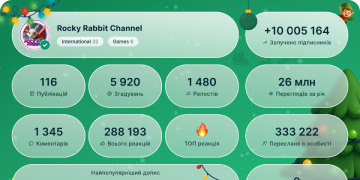
1 246 456
Подписчики
-63024 часа
-3 4967 дней
-15 87730 день
Архив постов
Repost from Units.Network Announcements
Фото недоступноПоказать в Telegram
And 🥁.... there are more BIG REVEALS happening tomorrow! Sasha will announce the important dates and project updates for all the Units users and followers during his weekly AMA.
🔥 You can't miss those insights! This is your chance to get prepared for next week's events 💪
🗓 When: Tomorrow, 1 PM UTC
📍 Where: Twitter Spaces
Don’t miss it! 💥
👍 58🔥 39🤣 13🌭 10🖕 9😴 7👎 5❤ 4🍌 2👏 1
Фото недоступноПоказать в Telegram
Elon Musk, Bitcoin CEO
❤ 145😁 125👍 115🖕 18💊 17🔥 14😱 14🤪 6🥰 4🤓 4😨 3
💡 If you think unbacked fiat money was invented only recently (in 1971, at the end of the Bretton Woods system), you might be in for a bit of a surprise. 📜 Paper money was actually invented in China around the 10th century, originally backed by gold. 🏅 By the late 14th century, during the late Yuan Dynasty, excessive printing of paper money led to hyperinflation 💸, which contributed to the fall of the Yuan Dynasty and ushered in the Ming Dynasty. In response, the Ming reintroduced silver coins 🪙, abandoning paper currency.
⏳ Four or five centuries later, we face a similar situation: unbacked fiat money reappears. This time, however, we likely won't revert to a gold-backed system. 🌍 Throughout history, humanity has experimented with various forms of money, and now we are exploring cryptocurrency 💻🪙 as a potential currency or as an asset to back money. It seems inevitable that by 2030, all governments will embrace Bitcoin. 🚀
🔄 This shift may lead to wealth redistribution and help mitigate some inflationary pressures. Will it change the world significantly? Not really. 🤷♂️ Money will simply take a new form, continuing as a measure of scarcity and an enduring partner of inequality. Without social change, no new form of money can make a meaningful difference. ⚖️ Blockchain, a double-edged sword, could worsen inequality if we focus solely on its monetary aspects. However, it also has the potential to lead us to a post-scarcity society if used to change the fabric of society through decentralized governance. 🌐 The future of humanity is post-scarcity! ✨
👍 60❤ 15👎 9😱 9🖕 4🤣 1
You still have time to earn some Units points right here on Telegram! TGE in about 2 weeks! Install test net wallet, help us test the network by doing simple transactions, and get Unit0 tokens at TGE! @UnitsWallet_bot
👍 96❤ 61👎 15🔥 15👏 11🖕 5🙏 2🤣 2🥰 1
Показать все...
👍 73👎 18❤ 17🖕 16🔥 9😎 7🙏 1🤣 1
Фото недоступноПоказать в Telegram
Nikola Tesla, Inventor of Bitcoin
❤ 69👍 54🤣 22🤪 13🤔 12🆒 9👏 7🥰 5✍ 4🫡 4🤝 3
Blockchain Finality in a couple of paragraphs.
🚀 In classical blockchains like Bitcoin, there's no guarantee that a transaction included in a block won't be reversed later. There’s only a probability. For example, after two blocks follow the one with your transaction, the chance of reversal becomes negligible (though still >0). Bitcoin has no finality, only probabilities. There can be multiple chains of blocks (forks), and the rule is to pick the longest one. However, there’s no guarantee the longest chain now will remain the longest in the future, and a shorter chain could catch up.
⚠️ This lack of finality creates significant challenges. For instance, if there's a blockchain fork, an on-chain trade could be reversed, and your account balance would revert to its previous state, making the trade disappear. This is inconvenient, to say the least. That’s why most Layer 1 blockchains seek ways to introduce finality, ensuring that once a transaction is recorded, it stays there for good.
🔍 How do they achieve this? By combining traditional consensus algorithms (PBFT, Paxos…) with open leader selection , which I covered briefly here. Remember, Bitcoin’s true innovation wasn’t the blockchain itself, but Open Leader Selection, which allows anyone to participate as a transaction validator!
🗳️ Those old-school algorithms were based on a voting procedure. In decentralized systems, there's no central authority to count votes, so participants coordinate votes on a pairwise basis to reach consensus. This approach isn’t fast with many participants, but it offers finality—once enough participants vote, the block is finalized and can't be reversed (assuming there aren't too many misbehaving nodes, and the voting process isn't overly lengthy).
⚡️ Modern blockchains combine innovative leader selection methods with voting processes. In Proof of Work, you propose a block if you have enough computing power, whereas in Proof of Stake, you’re selected randomly based on your account balance. A limited number of randomly selected participants then vote to finalize the block.
💎 A prime example is Algorand, boasting one-block finality through randomized leader selection, followed by TWO subsequent selections of validator subsets, and TWO rounds of voting to finalize the block. The idea is that randomly selecting subsets from a large validator pool ensures the subset is representative of the entire set, containing a similar percentage of “good” participants who follow the protocol.
⚖️ In Ethereum, there is only ONE round of voting, but it also uses so-called "economic finality." After voting, the entire network confirms the block, making attacks impractical because they’d require control of over 33% of all staked ETH (I'll explain why specifically 33% another time). This process takes a bit longer than Algorand, with finality occurring after 32 blocks, but it's still quite fast.
🧩 Achieving finality in blockchains is a bit of a balancing act—it involves some pre-Bitcoin approaches that may seem to contradict the decentralized spirit of blockchain. But as long as it doesn’t lead to centralization and the network remains open, it’s a step in the right direction! 🚀 #blockchain101
👍 53❤ 20👎 7👏 7🖕 6😁 4🔥 3🙏 3🏆 2🥱 1
https://x.com/puzzle_network/status/1845802151173361682 Ideas turn into code!
👍 57❤🔥 23👏 12👎 8🖕 8🔥 7❤ 6😁 2🙏 1
🚀 Blockchain is Simple🤓
Blockchain is often presented as something sophisticated and hard to grasp. But it’s not! Let me explain in a few paragraphs what blockchain actually does. 👇
Blockchain helps achieve consensus in a community where members interact. For example, it helps everyone agree on the amount of a certain asset each member holds (like USDT or BTC). And that’s basically it! 💡
This kind of consensus was possible even before Bitcoin and blockchain—there were algorithms that did this. But to understand what Bitcoin brought to the table, let’s take a look at how those OG protocols worked. ⚙️
How the Original Consensus Protocols Worked:
Skipping some technicalities, they had two main parts: leader selection and voting.
1️⃣ Leader Selection: First, a leader was selected from a closed circle of participants. This leader would provide a "view" of the system (e.g., how many tokens each member had).
2️⃣ Voting: Then, members would vote on that view and reach consensus. If there weren’t too many misbehaving members, consensus could be achieved with a guarantee. ✅
Bitcoin Improved on Two Key Things:
1. Open Leader Selection:
Bitcoin made leader selection open. Anyone could become a leader and propose a view (a Bitcoin block) if they had enough computational power. This was game-changing and is 99% of Bitcoin’s success—an open, decentralized system where anyone can participate. 👐💻
2. Efficient Voting:
Pre-Bitcoin protocols involved a lot of back-and-forth—members had to agree with each other on a pairwise basis, which made consensus in communities of more than ~100 members super slow. 🚶♂️💤
Bitcoin introduced blocks and a chain of blocks: you effectively vote for a system view (proposed by the previous miner) by attaching your block to theirs. This made voting scalable to thousands of members! ⚡ (But you give up on finality through this... more on that in another post! 😉)
And that’s blockchain in a nutshell. 🥜 Simple enough for middle schoolers to understand, right? 😄📚 #blockchain101
👍 82❤ 20👎 11👏 6😁 6😨 6🖕 4🔥 3🤓 2🙏 1
Repost from Units.Network Announcements
Фото недоступноПоказать в Telegram
💬 Sasha's AMA is now live on Telegram! Tune in here tomorrow at 1 PM UTC and ask any questions about Units and the ecosystem. The top ones will be rewarded – don’t miss out! 🏆
👍 70❤ 26👏 26🔥 16🖕 11🐳 6👎 2🙏 1🤣 1
🚀 Memecoins: So Bad They're Good
A proper memecoin doesn’t belong to anyone, but to its community as a whole. You could say it’s an attempt to Take the Power Back 🕊️ and launch financial assets that truly belong to the people. In a time when stocks are being propped up by non-stop money printing, it’s only natural that people want to take matters into their own hands. 💸
But let’s be real, memecoins have three major problems:
1️⃣ They aren’t usually community-owned. Sure, no vesting or unlocks, but founders use sniper bots to buy a big chunk of supply at launch, leading to rug pulls—whales eventually dump on the community. 🐋💸
2️⃣ You can't hold a memecoin forever. People want cash, not bags for life. You end up having to sell, leaving the community. 🤷♂️
3️⃣ And the most controversial... they have no utility. 🤔 Some argue that’s the fun part—memecoins are just for holding and trading memes, not being “useful.” But still, a little utility wouldn’t hurt, right?
💡 Solution? Let’s keep it simple:
👉 Unlock a portion of pool liquidity at each price milestone—say, every $1 increase. Distribute the USDT part to holders while burning the token part. 🔥
This way, the community has a real incentive to hold since they’re rewarded just for sticking around, while the supply goes down due to burns. 🏆📉
Rug pulls? Reduced. 🛑 Since USDT liquidity is taken out and given to holders, dumping for profit will require much higher token prices. 📈
Plus, adding some utility within the community makes the meme even stronger! Ideally, the token could be used as a community currency to pay for services provided by members. That’s the true endgame for memes—where they become not just a speculative asset, but a form of decentralized, privately issued money. 🌐💵
Let’s make memes unstoppable! 💥
👍 70❤ 14🔥 13🖕 6😁 2🌚 2👏 1🙏 1🥱 1💯 1👻 1
https://m.youtube.com/watch?v=nxdcCuR65zU HBO claims that Peter Todd is Satoshi. Don’t they know the truth lol.
👍 65🤣 33❤ 21💊 6😁 5🖕 5🐳 3🔥 2🙏 2🤨 2
DALL·E_2024_10_08_16_55_53_A_humorous_and_exaggerated_depiction.webp2.65 KB
👍 69😁 28❤ 24🔥 13👎 10🆒 7🖕 5🥱 3💘 3🐳 2
Units.network is redefining the restaking narrative by focusing specifically on consensus. Think of it as the "Eigenlayer for Consensus." While restaking can be about providing security guarantees across different protocols, our emphasis is on the foundational blockchain layer. We aim to reuse the consensus established in the base layer across all connected layers. This creates an ecosystem of interconnected, trustlessly linked blockchain networks, all sharing the same foundational layer and uniform security guarantees.
Through this unified approach, every chain in the ecosystem benefits from the same consensus guarantees as the base layer, making interchain bridging inherently trustless. This addresses the persistent problem of centralized bridging in the Layer 2 networks built on top of Ethereum. Units.network is aligning itself with the trajectory of the Ethereum ecosystem but has a notable advantage in speed of execution—implementing similar setups on Ethereum would require significant modifications to its base layer. With Waves, these modifications are far quicker and more adaptable.
On a practical level, Units aims to simplify the process of launching your own blockchain. There is currently no accessible, turnkey solution for projects looking to establish their own layers. Existing solutions are often costly and overly complex. With Units, launching a new chain is as straightforward as submitting a governance proposal in the DAO and providing incentives for miners and DAO participants—such as allocating a portion of your chain's token supply.
Once the proposal is approved by the community, your chain can be live within a matter of days, and you don't even need to manage your own validators. The DAO can also fund certain chain launches, leveraging its allocation of governance tokens, which also function as the fee token for the inaugural Unit0 network.
Units.network launches this month!
👍 68🔥 23🖕 15❤ 12👎 3👏 3💯 3😁 2🥰 1🙏 1🐳 1
✅ Top 3 Bitcoin mining pools control 60% of the total hash rate (mostly concentrated in the US).
✅ Top 3 ETH staking pools manage 45% of all staked ETH.
✅ Bitcoin addresses with over 1,000 BTC collectively own more than 40% of the total supply.
✅ Bridges between Ethereum layer 2 blockchains are centralized.
✅ Bridges from Ethereum layer to layer 2 chains are also centralized.
✅ Fiat-backed stablecoins are even more centralized than fiat itself.
✅ The only thing that is somewhat decentralized in crypto is asset issuance, but interactions with those assets are still largely centralized.
Crypto is something that properly hasn't even started yet.
👍 133❤ 55🔥 17🖕 16😱 7🤣 7🤷♂ 3✍ 3🙏 2🥰 1🐳 1
Фото недоступноПоказать в Telegram
Jheronimus Bosch, Bitcoin (1501)
👍 163❤ 75😁 37🥴 23🖕 17👏 14💊 11🤩 9🍓 6🤝 6🥱 3
📊 Telegram is full of trading channels with market forecasts and signals, so I definitely will not create another one. However, it's natural for me to provide some fundamental analysis of the markets, which I will be doing from time to time. Let's start with the basics: why it makes sense to buy Bitcoin and hold it (but with some caveats that most people overlook). 💡
💎 Actually, it's quite straightforward. Bitcoin is a good investment not because it provides some kind of real utility, but because fiat currencies are falling relative to it. 📉 When Bitcoin was a novelty, it skyrocketed in price due to its first-mover advantage in the digital gold game, but now it's more about fiat currencies declining against Bitcoin.
💸 Why are they doing so? The answer is not too complicated either: central banks have overplayed their hand in the monetary policy game and printed too much cash. 🖨️ They printed so much that they had to raise interest rates to deal with inflation, creating a situation where inflation and unemployment coexist. Excessive fiat goes into the stock market and crypto, keeping the bubble growing no matter what happens with the real economy. 📈 Stock prices become detached from reality, turning into a game that keeps people busy and hopeful.
🤯 Elites have essentially messed up fiat money, jeopardizing the concept of centrally issued currency. It wasn't a flawless concept to begin with; for example, economic cycles and stock market black swan events can be attributed to central bank monetary policy. Excessive economic stimulus through money printing has to be counterbalanced with rising interest rates, quantitative easing, etc., to keep the economy afloat, which creates business cycles that are essentially unnecessary and serve no reasonable purpose (check out Austrian Economic school thinkers for more details). 📚
🚀 Bitcoin is doing great in comparison. It's just an asset with a programmable limited supply, widely supported, and backed by a sizable community. It is bound to do much better than fiat.
⚠️ But there's a caveat. This does not turn Bitcoin into money. Very few people use Bitcoin to buy things directly. Millions use it as a hedge against inflation and as a speculative asset with the goal of earning more fiat money from Bitcoin trading.
💱 People hold Bitcoin to get more fiat. This makes sense as long as fiat is worth anything. If we continue our current approach to fiat money, sooner or later it will impact the economy so severely that even Bitcoin won't help us. The initial premise of Bitcoin was to create better money, but it has turned into the idea of creating the ideal speculative asset—which is more or less the direct opposite of the original idea.
Bitcoin is not a hedge; it's just an asset that should do well as long as the world economy doesn't collapse. 🌍 Buy and hold it, but remember that it solves exactly zero problems the world is facing today. 🧐
👍 71❤ 31🔥 14🖕 11🤔 6🥴 6😁 5💯 4👏 3🙏 2🐳 2
Repost from Units.Network Announcements
Фото недоступноПоказать в Telegram
🎉 Get Ready for Tomorrow's Big Event!
🎙Catch Sasha, Units Founder, and our amazing host Pauli Speaks😎 live as they dive into your questions about Units and explore the latest Web3 trends!
💥 Plus, there's a huge drop you won't want to miss!
📅 When? Tomorrow at 1 PM UTC on X Spaces
💬 Drop your questions in the comments and tune in!
👍 103❤ 30🔥 27🖕 23👾 10🐳 8🥴 3👎 2💋 2😁 1🍾 1