IELTS With Masters
Відкрити в Telegram
🔵Ace IELTS with Masters @IELTSwMasters 🔴Our educational supergroup👇👇👇 https://t.me/joinchat/UWGRwWqXmmpEdkBI ⚫ @EngMasters ⚫ @QuizMasters 🔴For Paid/Cross promotions contact @IELTSwMastersSupport
Показати більше2025 рік у цифрах
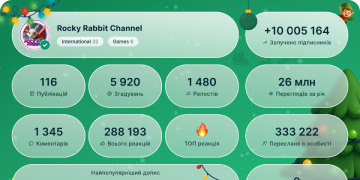
122 939
Підписники
-6324 години
-2517 днів
-73330 день
Архів дописів
✅Practice Task:
Passage:
"Online education is becoming more popular, especially among adults with full-time jobs."
-Question:
Online education:
A) is mainly used by university students
B) is popular with working adults
C) is not suitable for adults
D) is more effective than traditional learning
❓Which is the Word Match Trap?
Comment your answer below!👇
#Reading #ReadingTraps
@IELTSwMasters
@IELTSworl_d
❤ 9👍 8🤬 1
✅IELTS Reading Traps Series: Post 2 – The Word Match Trap
🔹Many students fall into this classic trap:
They see the same word in the passage and question… and assume it’s the right answer.
-That’s the Word Match Trap — and it’s a Band 5 mistake.
🚨 What’s the trap?
IELTS loves to use the same word from the passage in the wrong answer choice to trick you.
-Why?
Because they want to see if you understand the meaning, not just the word.
🔍 Example:
-Passage:
“Doctors now realise that regular walking can reduce the risk of heart disease significantly.”
-Question:
Walking:
A) Increases risk of heart disease
B) Has no effect on heart disease
C) Is recognised by doctors as helpful for the heart
D) Is better than running
-Trap Option: A) – It uses “heart disease”
❌ But it says the opposite of the passage!
✅ Correct Answer: C) – Same idea, different words ("reduce the risk" = helpful)
🎯 How to beat the Word Match Trap:
✔️ Don’t rely on word spotting
✔️ Read the full sentence carefully
✔️ Look for synonyms and paraphrasing
✔️ Check if the meaning is the same, not just the vocabulary
#Reading #ReadingTraps
@IELTSwMasters
@IELTSworl_d
❤ 5👍 4
✅IELTS Reading Traps Series: Post 1 – Introduction
🔹Want to improve your Reading score? Start by learning the tricks IELTS uses to trap test-takers! Even strong readers lose marks because they fall for these common traps.
-In this series, we’ll cover the TOP IELTS Reading Traps and how to beat them:
🔍 Upcoming Topics:
▪️The Distractor Trap – It looks right but isn’t (✅ Already posted!)
▪️Word Match Trap – Same word ≠ Same meaning
▪️Extreme Language Trap – Always? Never? Be careful!
▪️True vs Not Given Confusion – One of the hardest in IELTS
▪️Paraphrase Mismatch – IELTS loves tricky rewordings
▪️Order Trap in Matching Headings
– Why you shouldn’t go top-down
▪️Too Fast Trap – When you skim too quickly and miss details
▪️Time Pressure Panic – Psychological trap: rushing leads to mistakes
📌 What You’ll Learn:
✔️ How to recognize traps in T/F/NG, multiple choice, matching, sentence completion, and more
✔️ Real examples from IELTS-style texts
✔️ Simple strategies to avoid each one
✔️ Practice tasks + answers with explanations
Follow @IELTSwMasters and share with friends who need Band 7+!
#Reading #ReadingTraps
@IELTSwMasters
@IELTSworl_d
❤ 5👍 5
✅ Practice Task:
-Which one is the distractor in this question?
“The main reason people prefer online shopping is…”
A) convenience
B) product quality
C) lack of customer service
D) store atmosphere
Drop your answer below!
#Reading
@IELTSwMasters
@IELTSworl_d
❤ 9👍 1
✅IELTS Reading Tip: Don’t Fall for Distractors!
🔹Do you often choose the wrong answer even though the keyword looks correct?
You might be falling for a distractor — one of IELTS Reading's trickiest traps!
🔍 What is a Distractor?
A distractor is an option that seems correct at first glance, because it:
🟢 Contains words from the passage
🟢 Sounds logical
❌ BUT it does not match the meaning of the text accurately
🧠 Example:
-Passage:
"While some believe technology reduces creativity, recent studies show it can actually enhance creative thinking in young people."
-Question:
According to the passage, technology...
A) reduces creativity in children
B) improves creativity in young people
C) limits the development of creative thinking
D) has no effect on creativity
🟢 Correct Answer: B
❌ Distractor: A → This repeats part of the sentence ("technology reduces creativity") but ignores the author’s actual point.
🎯 How to Avoid Distractors:
✔️ Always read for meaning, not just keywords
✔️ Watch out for extreme words (e.g., always, never, all) — IELTS rarely uses them in correct answers
✔️ Double-check what the writer actually says, especially in T/F/NG and multiple choice questions
#Reading
@IELTSwMasters
@IELTSworl_d
❤ 9👍 2
✅How to Write a Perfect Body Paragraph in IELTS Writing Task 2
🔹Writing Task 2 isn’t just about ideas — it’s about organising them clearly.
-Here’s a simple structure to write high-scoring body paragraphs (Band 7+):
🔹 Step-by-Step Structure:
1️⃣ Topic Sentence
👉 Introduce the main idea of the paragraph. This should directly support your thesis.
2️⃣ Explanation
👉 Expand on your idea. Explain why it's important or how it works.
3️⃣ Example
👉 Give a specific example to support your idea. Realistic or hypothetical.
4️⃣ Link to Thesis
👉 Show how this idea supports your overall argument in the essay.
🧠 Example Question:
“Some people think students should learn practical skills at school, while others think academic subjects are more important. Discuss both views and give your opinion.”
🟢 Sample Body Paragraph:
👉One key reason why academic subjects are essential is that they develop critical thinking and problem-solving abilities.
👉These skills are necessary for success in higher education and many professional fields.
👉For example, subjects like mathematics and science teach students to analyse data, identify patterns, and apply logical reasoning; skills that are vital in careers such as engineering, research, and medicine.
👉Therefore, focusing on academic education lays the foundation for intellectual development and long-term career success, supporting the view that schools should prioritise such subjects.
🎯 IELTS Tips:
✔️ Make your topic sentence clear and specific
✔️ Avoid listing ideas — go deep into ONE clear point
✔️ Keep the logical flow: idea → explanation → example → link
✔️ Use linking words to maintain cohesion: For example, Therefore, As a result, Moreover…
💬 Practice Task:
Write one body paragraph for this question:
“Some people think children should learn to cook. Do you agree or disagree?”
Try using the 4-step structure above and share your paragraph
below! 👇
#Writing #BodyParagraph @IELTSwMasters
@IELTSworl_d
❤ 16👍 2
Just like hedging, concessions elevate your sophistication. Make sure you take time to fully understand them. Any questions, you can ask in the comment group.
❤ 9🔥 2
✅Mastering CONCESSIONS for Band 7+ in IELTS
🔹Want to show the examiner you're a high-level user of English?
Learn how to use concessions to present balanced, nuanced arguments — a key skill at Band 7 and above!
🔹 What is a CONCESSION?
A concession is when you acknowledge the opposite side of an argument before presenting your own point.
-This shows you’re not just giving one-sided opinions — you're thinking critically and responding thoughtfully.
🧠 Common Concession Phrases:
🟢 While it is true that...
🟢 Although some people argue that...
🟢 Admittedly,...
🟢 Even though...
🟢 It cannot be denied that... however,...
✍️ Writing Example:
❌ One-sided:
Technology is harmful because it reduces human interaction.
✅ With concession:
Although technology may reduce face-to-face interaction, it also enables people to stay connected over long distances.
💡 This version shows balance, which examiners reward in Task Response and Coherence & Cohesion.
🗣️ Speaking Example:
❌ Too direct:
Working from home is better for everyone.
✅ Improved with concession:
While working from home has its benefits, I believe it doesn't suit everyone — especially those who need a structured environment.
🎯 IELTS Tip:
Using concessions helps you present arguments like an academic — this is exactly what the examiner looks for in Band 7+ Writing Task 2 and Part 3 Speaking.
💬 Challenge Time:
Rewrite this sentence using a concession:
“University education is always better than vocational training.”
Drop your answers below! 👇
#Writing #Speaking #Concessions
@IELTSwMasters
@IELTSworl_d
❤ 14👍 2🔥 2
✅Mastering HEDGING for Band 7+ in IELTS
🔹Want to sound more academic, balanced, and precise?
Then you need to start using hedging!
🔹 What is HEDGING?
Hedging means softening your statements instead of sounding too direct or certain.
It shows that you understand complexity — a key skill for high band scores.
🔸 Why is it important?
✔️ Shows critical thinking
✔️ Avoids overgeneralizing
✔️ Makes your argument more academic and balanced
🔹 Band Descriptors (Writing & Speaking):
Hedging helps improve your Task Response and Grammatical Range & Accuracy — essential for Band 7+
🔵 Useful Hedging Phrases:
🟢 It seems that...
🟢 Some people believe that...
🟢 It is likely that...
🟢 There may be...
🟢 In many cases...
🟢 Tends to... / Appears to...
✍️ Writing Example:
❌ Too strong:
Online learning is always better than traditional education.
✅ With hedging:
Online learning is often considered more efficient in some situations.
🗣️ Speaking Example:
❌ Too direct:
Young people don’t care about the news.
✅ Better with hedging:
I think many young people tend to be less interested in the news, especially political topics.
🎯 IELTS Tip:
Using hedging makes your answers more realistic and nuanced, which examiners love at Band 7 and above.
💬 Practice challenge:
Rewrite this sentence using hedging:
“Technology is ruining real communication.”
Drop your answers below! 👇
#Writing #Speaking #Grammar #Hedging
@IELTSwMasters
@IELTSworl_d
❤ 18👍 6
✅IELTS Vocabulary Booster: 3 Words You Should Know!
🔹Want to sound more advanced in Speaking and Writing?
Here are 3 high-scoring words you can start using today:
1️⃣ Crucial (adjective)
- Meaning: Extremely important or necessary
- Use it instead of: very important
🔸 Example:
*It’s crucial to manage your time well during the IELTS exam.
🔘 IELTS Tip: Use this word in Writing Task 2 when discussing key points or solutions.
2️⃣ Contribute (verb)
- Meaning: To give or add something (like time, effort, or ideas)
- Use it instead of: help, give
🔸 Example:
Everyone in the team contributed to the success of the project.
🔘 IELTS Tip: Great for topics like teamwork, education, or volunteering in Speaking Part 2 or 3.
3️⃣ Efficient (adjective)
- Meaning: Working well without wasting time or resources
- Use it instead of: fast, productive
🔸 Example:
Online learning can be more efficient than traditional classroom methods.
🔘 IELTS Tip: Use this word in Writing Task 2 to describe technology, methods, or systems.
💬 Comment your own sentence using one of these words below!
#vocabulary #speaking #writing
@IELTSwMasters
@IELTSworl_d
❤ 16👍 6
Показати все...
❤ 9👍 3
Фото недоступнеДивитись в Telegram
✅Everything, Something, Anything, Nothing
#vocabulary
@IELTSwMasters
@IELTSworl_d
👍 14❤ 7
✅IELTS Speaking Part 1 – Sample & Strategy
🗣️ Question:
Do you enjoy spending time with your family?
🔵 How to answer:
In Part 1, the examiner wants natural, simple answers — not long speeches. But you should still:
🔹 Answer the question clearly
🔹 Add a short reason or example
🔹 Use natural, everyday language
🔵 Useful structure:
Yes, I do + [reason] + [example or detail]
🔸 “Yes, I really enjoy spending time with my family, because it helps me relax and feel connected. We usually have dinner together and talk about our day.”
🔹 Or flip it:
No, not really + [reason] + [softening or neutral comment]
🔸 “To be honest, not really. We all have busy schedules, so we don't spend much time together. But when we do, it’s usually nice.”
✨ Vocabulary ideas:
-Spend quality time
-Bonding experience
-Catch up with
-Close-knit / extended family
-Make memories
⚠️ Don’t just say:
🚫 “Yes.”
🚫 “I like it.”
👉 These are too short and won’t show your fluency or grammar range.
🎯 IELTS Tip:
In Part 1, keep your tone friendly and relaxed — this is like a warm-up. The goal is to sound natural but not too casual.
📝 Practice time!
Write your own answer to this question below 👇
#Speaking
@IELTSwMasters
@IELTSworl_d
❤ 20👍 8
✅GRAMMAR BOOST: “Although”
@IELTSwMasters
✨ What does "although" mean?
"Although" is a conjunction used to show contrast – it’s similar to "but" or "even though."
It means "in spite of the fact that..."
🔸 Why is this structure important?
🟩 In IELTS, the more complex and accurate your grammar, the better your score.
🟩 “Although” helps you connect ideas smoothly and show contrast clearly – a key skill in Band 7+ writing and speaking.
📌 Using ‘although’ correctly shows:
-A wide range of sentence structures
-Clear and logical relationships between ideas
-Control over grammar and coherence
🔸 Structure:
🔹 Although + subject + verb, main clause
🔹 Main clause + although + subject + verb
📍 Examples:
✔️ Although she was tired, she finished the report.
✔️ He went out although it was snowing heavily.
🧠 Tip: Add a comma when “although” comes at the beginning of the sentence.
❗ Common Mistake:
🚫 Although of the traffic, but we were late.
✅ ✔️ Correct: Although there was traffic, we were on time.
✅ Or use: Despite the traffic, we were on time.
🎯 IELTS Tip:
-Using contrast structures like “although” helps your Writing Task 2 essays sound more academic and balanced.
-It also makes your Speaking answers sound more natural and fluent.
💬 Practice Time:
Write your own sentence using although and post it below in thecomments!
#Writing #Speaking #Grammar
@IELTSwMasters
@IELTSworl_d
❤ 16👍 7🥰 3
Which of the following is NOT a good strategy in the Speaking test?Anonymous voting
- Expanding your answers with examples
- Using memorized templates for every answer
- Varying your intonation and tone
❤ 11👍 2
✅IELTS Speaking: Common Mistakes to Avoid! 🚫
❌ Memorized Answers
Examiners know when you're reciting — sound natural and spontaneous!
❌ Overusing Fillers
"Umm… like… you know…" — avoid them! Replace with natural pauses instead.
❌ Short Answers
Don't give one-word or yes/no replies. Extend your answers with reasons or examples.
❌ Misusing Complex Vocabulary
Big words don’t guarantee high scores — clarity and accuracy matter more.
❌ Grammar Slips
"I has been..." ❌ — Keep your tenses and subject-verb agreement in check!
❌ Monotone Voice
Show emotion! Use intonation to sound more fluent and confident.
✨ Tip: Practice speaking aloud every day. Record yourself, get feedback, and improve!
#speaking
@IELTSwMasters
@IELTSworl_d
❤ 18👍 4
✅IELTS Writing Tip: Improve Your Body Paragraphs!
🔹Let’s take a look at how to build a clear and cohesive body paragraph in Task 2.
🎯 Topic: The importance of regular exercise
🔹 Basic version (simple but clear):
"One reason why people should exercise is that it helps them stay healthy. When people move their bodies often, they can become stronger and get sick less often. For example, someone who runs a few times a week may feel better and have more energy than someone who does not. This shows that exercise is important for living a healthy life."
🔹It’s simple and easy to understand — but let’s improve it with some key IELTS writing tips!
🔧 How to Upgrade Your Paragraph
🔸Use linking words (cohesive devices)
🔸 Replace basic vocabulary with more academic words
🔸 Use varied sentence structures
🔸 Clearly link back to the thesis
✨ Improved Version:
"One significant reason why regular exercise is important is that it enhances overall health. When individuals engage in physical activity frequently, they strengthen their bodies and reduce the risk of illness. For instance, a person who jogs several times a week is likely to experience increased energy levels and improved heart function compared to someone who leads a sedentary lifestyle. Therefore, regular exercise clearly contributes to a healthier life, which supports the idea that staying active is essential for overall well-being."
📌 Takeaway Tips:
✔ Start with a clear topic sentence
✔ Explain the idea logically
✔ Give a relevant example
✔ End with a sentence that connects to the main idea (thesis)
#writing
@IELTSwMasters
@IELTSworl_d
❤ 17👍 5🥱 1
✅IELTS Speaking Challenge – Part 2
📌 Cue Card:
Describe a time when you helped someone.
You should say:
-Who you helped
-How you helped them
-Why you helped them
-And explain how you felt about helping this person.
🗣️ Sample Answer (You can repeat this or create your own!):
"A time I helped someone was when I assisted my friend during exam season. She was struggling with understanding economics, which happens to be my best subject. I spent several evenings tutoring her after school and even created some summary notes and mock tests. I helped her because she was genuinely trying, but just needed a bit of support. In the end, she passed the exam with good marks, and I felt incredibly proud. It reminded me how rewarding it is to share knowledge and lift others up."🎧 Your Task: 🎤 Record your own answer (either your original story or repeat the sample) 📤 Share it in the group or send it privately if you prefer @IELTSwMastersSupport Let’s build confidence and fluency together! 🔥 #SpeakingChallenge #Speaking @IELTSwMasters @IELTSworl_d
❤ 13👍 9
✅🎧 IELTS Listening Must-Know Tips
📍 Tip 1: Focus Like a Laser – Don’t Drift!
-Tip:
Train your brain to stay in the moment. One lost sentence can mean a lost answer.
-Try this:
Listen to a 1-minute clip (e.g., podcast or news). After listening:
Write down 3 main ideas.
No pausing, no rewinding.
🎯 This helps build active listening and attention stamina.
📍 Tip 2: Predict Before You Hear
-Tip:
Use the 30 seconds before the audio starts to guess the type of answer (name, number, time, place, etc.).
-Try this:
Look at the question:
_"The museum opens at _."
You already know you're listening for a time — maybe "9 a.m." or "half past nine."
🎯 This narrows your focus and improves accuracy.
📍 Tip 3: Don’t Panic at Unknown Words
-Tip:
Missing one word doesn’t mean missing the answer. Context is king!
-Try this:
If you hear:
"The venue is rather picturesque, surrounded by hills."
Maybe you don’t know “picturesque” — but “surrounded by hills” helps.
🎯 Learn to use clues around unknown words.
📍 Tip 4: Watch for Distractors!
-Tip:
IELTS Listening often includes “false leads.” Be alert!
-Example:
"We were going to meet at 3 p.m., but John said 4 would be better."
Answer? ➤ 4 p.m.
🎯 The first option is a trap. Always listen till the end of the sentence.
📍 Tip 5: Practice with Subtitles — But the Right Way
-Tip:
Use English subtitles to learn new phrases — then remove them and try again.
-Try this routine:
Watch a short YouTube clip with subtitles.
Note 5 useful phrases.
Rewatch without subtitles — can you still catch them?
🎯 Great for learning natural expressions & improving speed.
#listening
@IELTSwMasters
@IELTSworl_d
❤ 27👌 3👍 2