
Survive the Jive: All-feed
Kanalga Telegram’da o‘tish
All StJ activity updates here on the All feed. ᛝ🐗 🌐 Website: https://survivethejive.blogspot.com 👕 Merch: https://survivethejive-shop.fourthwall.com ▶️ Main YouTube: https://www.youtube.com/c/Survivethejive/ 🔗 Other links: https://linktr.ee/SurvivetheJive
Ko'proq ko'rsatish2025 yil raqamlarda
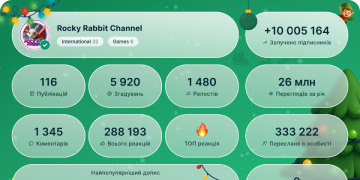
15 017
Obunachilar
+524 soatlar
+167 kunlar
-2030 kunlar
Postlar arxiv
Photo unavailableShow in Telegram
Scythians by Andrey Klimenko
⚡ 51🥰 10❤ 8🗿 4👀 1
Repost from Survive the Jive: All-feed
Photo unavailableShow in Telegram
The Anglo-Saxon holy day of Mōdraniht "Mother's night" was said by Bede to have been a pagan holiday on the night before Xmas, but since pagans didn't keep a Christian calendar, most interpret that to mean on the night before winter solstice, which this year falls on Sunday night.
Rudolf Simek says that Mōdraniht "as a Germanic sacrificial festival should be associated with the Matron cult of the West Germanic peoples on the one hand, and to the dísablót and the Disting already known from medieval Scandinavia on the other hand and is chronologically to be seen as a connecting link between these Germanic forms of cult."
Dísablót was a Norse blot held for female deities called disir. Mōdraniht was not a celebration of women or mothers in general, but rather of primordial clan mothers, that is divinised progenitors who all the kinsmen held in common. Celebrating these clan mothers brings the community together and recognises our common blood. A similar practice existed among the North West European Celts in thei
🔥 61❤ 15
Repost from Survive the Jive: All-feed
As we approach the Yuletide season, I would like to remind you of this animation I collaborated on which helps children learn about the pagan origins of Yule. Also available as a beautiful graphic novel which is an ideal gift.
https://youtu.be/76DYeyEEjVs
❤ 58🎄 5
The moon is now new signalling the start of the first of two months of Yule.
It is unusual this year that Yule begins with the solstice as normally it is between the two months.
The eve of solstice is probably the Night of the Mothers - when sacred ancestral Mothers are worshipped.
Yule’s high feast itself is on the 1st of February next year (full moon) and is also concerned with honouring the dead.
In many regions an extra place is laid at the dinner table, or a bowl of porridge is left outside for ancestors. If you drop food on the floor at xmas dinner, some regions believe it must be left there to feed the wild hunt. Odin, the Yule father, leads the dead warriors in the wild hunt in Winter.
There are other aspects to Yule as well including a rite of the king and the death of the sun, and the swearing of oaths but the dead are to be remembered.
🔥 53⚡ 22❤ 9
Repost from Survive the Jive: All-feed
Photo unavailableShow in Telegram
Do you know what the old homeland of the Saxons in Germany is actually like? Find out in this new film made in Lower Saxony 🇩🇪 in which i uncover the Roots of the Saxons!
what was life like for the Saxons in Germany? Why did they want to go to Britain? And what was the relationship of the Old Saxons to the Roman Empire? All is revealed in this free NEW YouTube film
⚡ 57🔥 5❤ 1
This year, 2025, I will be celebrating Modraniht on the 20th (tomorrow)
🙏 31⚡ 13👍 5❤ 3
Repost from Survive the Jive: All-feed
The Anglo-Saxon MODRANIHT “Mothers’ Night” was not a sacrifice to the Earth Mother goddess (her name in English was Erce) but rather seems to have been equivalent to the Norse Disablot. Disir is a broad category of female beings which includes the goddess Freyja and the Valkyries. I suspect it also included clan Mothers and hence this is the focus of the Anglo-Saxon festival. It may also have been influenced by the NW European Celtic cult of the Matres although this didn’t exist in Britain by the time of the Anglo-Saxon colonisation of Britain.
Bede tells us it was celebrated on Xmas eve but he also makes it clear that the pagans didn’t celebrate Xmas or use the Julian calendar like Christians so obviously it isn’t really on 24th December on the Julian or Gregorian calendar. Therefore it must either have been on the night before the shortest day (their equivalent of solstice) or on the night before the Yule feast which was on the full moon of the second Yule month.
Most pagans seem to prefer the former date. That would place Modraniht on the night of Thursday 21st December this year (2023).
❤ 39⚡ 12🤔 2
Photo unavailableShow in Telegram
Incredibly important region for understanding the roots of the English people. It contains several incredible sites which I filmed for Roots of the Saxons:
Issendorf: a Saxon cemetery with over 6000 burials
Anderlingen: A Nordic Bronze age barrow and cist grave which was re-used by Saxons
Heidenschanze: An Iron age fort the Saxons used to defend against Romans
Heidenstadt: A Migration era fort from which the Saxons likely staged the invasion of Britain
⚡ 77❤ 32👍 9
This took me about five months to make! However i was working on the part 2 at the same time so it won’t take as long!
⚡ 64❤ 6🎄 4
Photo unavailableShow in Telegram
Do you know what the old homeland of the Saxons in Germany is actually like? Find out in this new film made in Lower Saxony 🇩🇪 in which i uncover the Roots of the Saxons!
what was life like for the Saxons in Germany? Why did they want to go to Britain? And what was the relationship of the Old Saxons to the Roman Empire? All is revealed in this free NEW YouTube film
⚡ 82❤ 29👍 9🎄 4🐳 1
Around the time TBK were settling Sweden, some fishermen deposited a doggo in a lake with a bone knife
https://www.labrujulaverde.com/en/2025/12/neolithic-dog-found-carefully-buried-at-the-bottom-of-an-ancient-swedish-lake-with-a-bone-dagger/
❤ 52🥰 10👍 5🫡 3⚡ 1
Photo unavailableShow in Telegram
Even after Constantine was emperor and Xianity was spreading in 4th century Britain, mere decades before the Woden worshipers took over the island, the Corbridge silver lanx was made. It depicts a shrine to Apollo. This challenges narratives that depict Xianity as deeply ingrained when the Saxons arrived. It was found in the Tyne.
The main scene on the dish shows the god Apollo at the entrance to a shrine, clasping a bow with a lyre at his feet. To his left enter the goddesses Artemis and Athena in conversation. The two female deities in the centre have not been conclusively determined. In front of the gods is depicted an altar, flanked by Artemis's hound, a fallen stag and a griffin. I suspect the thing on the bottom left is a jellyfish!
⚡ 76❤ 16🤓 5👍 3🐳 2
Romano-British Votive gold plaques from the Ashwell hoard, Hertfordshire, Britain, 3rd/4th century AD. They are dedicated to the Roman goddess Minerva and the Brythonic goddess Senuna.
British Museum.
⚡ 53❤ 11👍 1
My ancestor! A bell beaker male from Cambridgeshire, England c. 2400 BC displayed at the British Museum.
I got a side profile shot so you can see the skull type.
⚡ 80❤ 11🫡 7🗿 4
SHE WAS NOT BLACK!
Beachy Head lady is a skeleton from 2nd/3rd century Roman Britain. After a dodgy skull analysis it was claimed she was black and the BBC included her on a list of great black Britons!
Then a DNA test showed she was Southern European, likely from Cypress, so the BBC plaque for her at Beachy Head calling her a “black briton” was removed.
Now a better DNA test has shown she wasn’t even a Med; she was a blonde, blue eyed native Briton! Northern European.
I suspect that the allegedly black roman British skeleton called Ivory Bangle lady will also prove to be not black when her DNA is eventually published as well.
💯 151⚡ 35❤ 18🥰 8👍 1👻 1
Photo unavailableShow in Telegram
This is a guldgubbe “gold geezer” - small golden figures from pagan Scandinavia and of religious significance . This is from a grave and depicts a helmeted male
⚡ 56❤ 11👍 6🤩 2🗿 2
Photo unavailableShow in Telegram
This Germanic style influenced the Magyars too. These bow brooches come from Martynivka, Ukraine c. 600 AD. They also show Slavic influences
🥰 38⚡ 18👍 9❤ 3
Repost from Survive the Jive: All-feed
Radial headed brooches in this style were worn across the Germanic world. This one is probably Langobardic. Unusually though, it has a second design on the interior side which would not have been visible to anyone. The face is likely that of a god and it therefore had an apotropaic function.
❤ 50👍 7⚡ 5🗿 1
Repost from Survive the Jive: All-feed
Photo unavailableShow in Telegram
Radial headed Langobardic brooch with apotropaic god-face on interior face.
❤ 47⚡ 12