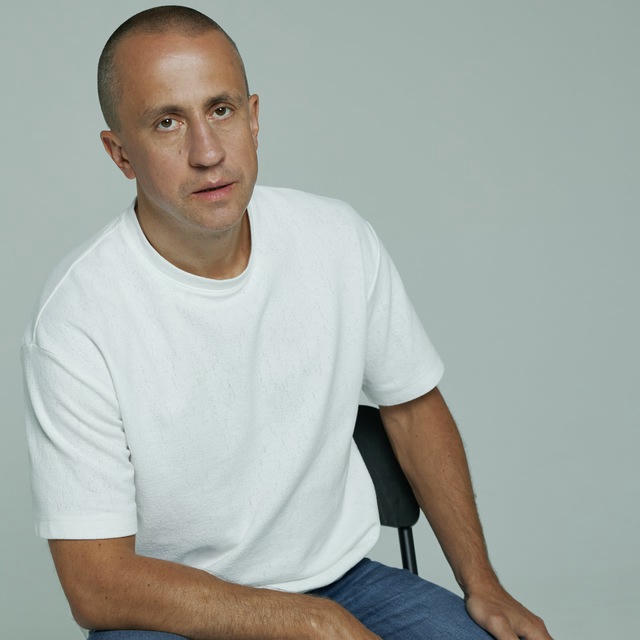
Sasha WAVES.
Kanalga Telegram’da o‘tish
2025 yil raqamlarda
1 246 192
Obunachilar
-63024 soatlar
-3 4967 kunlar
-15 87730 kunlar
Postlar arxiv
Photo unavailableShow in Telegram
Pablo Picasso. Decentralized (1938)
❤ 104👍 73❤🔥 18🤯 17👎 16🤡 11😁 10🫡 6🤩 5💩 5🎄 2
💬 Since we’re on Telegram - all Telegram woes stem from the fact that it pretends to be decentralized while actually being very centralized. But all of Telegram's success is also due to it being much more decentralized than other large social media networks. Mini apps are the real deal, of course! 🚀
🤔 However, trying to create a platform that seems decentralized but has a sole beneficiary under the hood is too unsustainable (but probably a lot of fun).
🔍 What we can conclude from looking at the current Telegram hype is that decentralization (even a pretend one) can create a vibrant economy. 💡
⚠️ But You better keep it real, not fake.
👀 You might say there’s no way to build a truly decentralized social media/messenger app that competes with centralized ones in usability, but I wouldn’t agree. Technically, it’s feasible now. The problem isn’t technical but organizational — we don’t have truly decentralized business ecosystems yet, and the appeal to be the founder and czar of a huge ecosystem is too big to resist. 🏰
⏳ This will all change when you can not only install a messaging client on your phone 📲 but also set up a messaging node in a data center and earn tokens for supporting the network, like Bitcoin miners earn Bitcoin. 💻💰
🔗 Either we’ll have this, or we’ll fall prey to censorship and a purely extractive social media economy where you are the product, and they want to make as much money off you as possible. 💸
👍 73🔥 19❤ 16🤔 10💩 9🆒 7😁 6🤡 4❤🔥 2🤩 1💯 1
Photo unavailableShow in Telegram
Salvador Dali. Apparition of a Blockchain (1963)
👍 154❤ 56🔥 15🤡 15😍 11🖕 9💩 8🤷♂ 7👎 5😁 3🤩 3
What we are doing now – we’re trying to take the Layer 2 narrative to its logical conclusion and create a way to launch your own chain in the simplest way possible.
Blockchain tech is (almost) the only decentralized technology that we know. The issue with it lies in its core – essentially, it is just a way to synchronize data between different servers, keeping data replicas on each server. Your data becomes tamper-proof and immutable, but there’s a lot of redundancy in keeping the same data in multiple locations.
So, the process can’t be fast almost by definition. Data replication scales poorly, even if it’s blockchain. In pre-Bitcoin data sync algorithms, the scaling complexity grew as the number of participants squared. What Bitcoin actually invented is linear growth of complexity relative to the number of participants. But it’s still slow.
So you need to find a way to circumvent this to actually make blockchains usable in the real world, where you have to send a lot of transactions. A simple way would be to have a lot of blockchains, with each one processing a portion of the total transaction volume.
But in this case, you have additional redundancy – you need each blockchain to have its own consensus with its own token. The native token of a blockchain is meant to provide economic incentives for validators to reach consensus, which makes data immutability possible. The more chains and tokens you have, the fewer incentives each chain is able to provide, making it less secure.
So it would be cool to have one master chain that could provide consensus for all other chains by creating sufficient economic guarantees with its native token. In this case, all other chains could just reuse it for achieving consensus. They would become interoperable (interacting with each other in a decentralized way). If the existing chains couldn’t handle the demand, we would just launch a new chain and connect it to the master chain.
This is what the Layer 2 narrative is basically about – one robust Layer 1 chain and a lot of Layer 2s connected to it. That was not the initial plan for blockchain scalability when blockchain started to become big around 2014–2016. The initial vision was so-called sharding, where you essentially have one chain broken into segments. Nobody has come up with a way to achieve this setup, unfortunately.
Ethereum is turning into this Layer 2/Layer 1 ecosystem as well. It’s just harder to implement it there, since that was not the initial Ethereum plan. Waves, being small and nimble, is able to move faster though. My goal is to reach this final solution where it’s very easy to launch your own chain, it’s connected to all other chains in a proper trustless way, and the system itself is essentially infinitely scalable. All you need to support more chains is to onboard more validators.
One chain will be one UNIT of the ecosystem, and the ecosystem itself will be UNITS.NETWORK, launching in about one month!
👍 87❤ 28🔥 8💩 8🥰 7🖕 4🤩 3👎 2🤡 2😴 2😁 1
Repost from Waves 🌊
00:32
Video unavailableShow in Telegram
📸 Amazing highlights from "Web3 in the Fast Lane" event by Luna PR! See us soon at the next big events! ❤️
Sasha Landscape 30 sec.mov90.86 MB
👍 79❤ 46😁 17👎 8🔥 5💩 5🖕 3🤩 1🙏 1🐳 1
Third time's a charm. I’ve had too small TG channels before, but decided to start a BIG one now :). The timing is just right, Telegram is getting a lot of traction, and you can reach out to a wide web2 audience. And try to explain to them that Web3 is something much bigger than tap-to-earn games and memes (or maybe Web3 is something that can’t be successful without Web0, the new infrastructure for the Internet itself).
Several new projects are launching on Waves now, starting with units.network, an ecosystem extension that will turn Waves into a proper Layer Zero blockchain with a lot of blockchains connected to it. The ecosystem will be based on principles of strict decentralized governance. Without decentralized community governance, Crypto is just glorified gambling.
Stay tuned! OGs are back!
- All chains will be interconnected
- All governance will be decentralized
- All narratives will be real
Power to the people and ride on Waves!
👍 51❤ 25👎 8🤡 5💩 3🐳 2🤷♂ 1🥰 1😁 1🙏 1🖕 1